

Learn how project-specific construction specifications help architects and engineers reduce risk, protect design intent, and define clear performance requirements. This guide covers CSI 3-part specifications, waterproofing and protective coating systems, material testing, and the specification request process.
Why Specifications Matter More Than Ever
The push toward higher-performance building envelopes and stricter contracts is transforming how architects and engineers document material systems. Think of a plaza deck or commercial facade where every joint, deck, and below-grade surface must resist water intrusion for decades while remaining compatible with finishes and easy to maintain.
Unlike informal product inquiries that return fragmented brochures, a formal specification request captures technical data, testing evidence, and installation guidance in a single deliverable. For design professionals, a vague spec is a liability that invites substitutions and failures, while a precise one protects design intent and the building. By the end of this guide, you will be able to prepare a complete request, interpret core test results, and integrate compliant language into your specifications.
The 3-Part Specification Format
A 3-part specification is a standardized document structure, organized under the Construction Specifications Institute (CSI) format, that describes a product across three sections: Part 1 (General), Part 2 (Products), and Part 3 (Execution).
Think of a 3-part specification as a recipe card: Part 1 lists the conditions and rules, Part 2 names the ingredients and their required qualities, and Part 3 explains the exact steps to install them correctly.
The mechanism is consistency. Because every specification follows the same skeleton, contractors, estimators, and inspectors locate submittal requirements, material properties, and installation procedures in predictable places, each cross-referenced to standards such as ASTM International (ASTM). This removes ambiguity from bidding and construction.
For design professionals, this means you can request a spec once and drop it into your project manual with minimal editing, reducing the risk of missing critical performance or warranty language.
Building Envelope Waterproofing Specifications
Building envelope waterproofing specifications are documents that define the materials and methods used to keep water out of a building's structural shell, including foundations, decks, roofs, and wall assemblies.
Imagine the building envelope as the skin on your hand: it keeps moisture out while allowing the body to function. Waterproofing specifications define that protective skin, sealing every vulnerable surface against water intrusion.
The mechanism works through layered systems. A waterproofing specification identifies membrane type, thickness, primers, flashings, and detailing at transitions such as penetrations and expansion joints, each specified with tested performance values so the assembly performs as one unified system.
For architects and engineers, this means the specification carries the full weight of design intent to the field, letting you defend waterproofing decisions and ensuring the installed system matches what was designed and tested.
Protective Coatings Specifications
Protective coatings specifications are documents that define liquid-applied or spray-applied material systems used to shield surfaces from moisture, chemicals, abrasion, and corrosion.
Think of a protective coating as sunscreen for a structure. It forms a bonded barrier over the substrate, absorbing wear and blocking damaging elements before they reach the material underneath.
The mechanism relies on surface preparation, application rate, cure conditions, and film thickness. A coatings specification defines each variable precisely, because a coating applied too thin or over a poorly prepared surface will fail regardless of product quality.
For design professionals, this means the coatings specification governs both selection and workmanship, letting you hold installers to verifiable standards matched to the exposure conditions each surface will face.
Material System Performance and Testing
Material system performance and testing is the compilation of laboratory and field data proving that coatings, membranes, and protective systems meet specified criteria under expected exposures.
Imagine material testing as a fitness test for building materials: tensile, adhesion, permeability, and accelerated weathering tests reveal capabilities much like strength measures indicate athlete readiness.
The mechanism uses standardized methods such as those from ASTM and manufacturer-controlled quality assurance to evaluate water intrusion resistance, adhesion after thermal cycling, chemical resistance, and compatibility with adjacent finishes. Results are summarized in technical data sheets and warranty conditions.
This matters because project risk depends on demonstrated performance. For engineers, documented tests convert manufacturer claims into verifiable evidence you can cite in contract documents and acceptance criteria.
The Specification Request Process
A specification request form is a structured intake tool that lets design professionals ask a manufacturer for project-specific documentation and connect with a technical team for support.
Think of a spec request as ordering blueprints tailored to your job rather than buying a generic template. You provide the project conditions, and the technical team returns documents matched to your requirements.
The mechanism is a guided exchange. You submit project details such as, substrate, exposure, system type, standards, and deadlines, and the technical team supplies editable 3-part specifications, product data, test reports, and detailing guidance, turning a generic catalog into a targeted document set.
For architects and engineers, this means less time formatting and more time designing, with accurate specification support from the earliest design phase through construction administration.
How This Differs from Generic Product Callouts
- Traditional approach: Generic callouts name a material without performance detail, inviting uncontrolled substitutions.
- New approach: 3-part specifications define tested properties, so substitutions must meet documented standards.
- Traditional approach: Copied boilerplate ignores project-specific exposure conditions.
- New approach: A specification request form tailors documents to the actual substrate and environment.
- Traditional approach: Installation guidance is assumed or omitted.
- New approach: Execution sections define preparation, application, and verification explicitly.
- Traditional approach: Designers work alone, with late submittal reviews that disrupt schedules.
- New approach: Early requests and direct technical access resolve detailing questions before they become field failures.
What This Means for Architects and Engineers
- Precise construction specifications mean fewer substitution disputes, protecting your design intent during competitive bidding.
- Building envelope specifications mean waterproofing is documented as a system, so transitions and details receive the same rigor as field surfaces.
- Protective coatings specifications mean workmanship becomes measurable, giving you enforceable criteria for inspection and acceptance.
- Explicit test references make acceptance defensible during commissioning and warranty periods.
- Direct technical support means design questions get expert answers early, preventing costly rework.
How to Request and Apply Specifications
- Define the conditions. Identify substrate, exposure, and system type first, because these variables drive every material selection.
- Submit a specification request form. Provide project name, contact, scope, and timeline so the technical team can match documents to your needs.
- Require referenced standards and test data. Independent laboratory reports reduce bias and support objective acceptance criteria.
- Review and coordinate. Confirm General, Products, and Execution align with design intent, and verify flashings, penetrations, and transitions with the technical team.
- Integrate into the project manual. Edit only what your project requires, preserving tested performance language.
Request Project-Specific Construction Specifications
Every project has unique requirements, and the right specification can help reduce risk before construction begins. Whether you're designing waterproofing systems, protective coatings, containment systems, or other high-performance material assemblies, requesting project-specific documentation helps ensure your specifications align with the intended application.
By submitting a specification request, you can receive support that may include:
- Editable CSI 3-Part Specifications
- Product data sheets
- Technical documentation and performance information
- Installation guidance
- Assistance selecting appropriate material systems for your project
Providing information such as the project type, substrate, environmental exposure, applicable standards, and project timeline allows the technical team to recommend documentation tailored to your application.
Ready to get started? Submit your project details through the Specification Request Form to connect with Chase Corporation's technical team and receive specification resources for your project.
Key Concepts Defined
3-Part Specification: Standardized document structure organized into General, Products, and Execution sections under the Construction Specifications Institute format.
Building Envelope: The structural shell separating interior from exterior conditions, including foundations, walls, roofs, and decks.
Film Thickness: The measured depth of an applied coating, a critical variable that determines whether a coating meets its specified resistance.
Material Compatibility: The chemical and physical suitability of two or more materials to coexist without adverse reaction or loss of performance.
Membrane: A continuous layer that prevents water from entering a structure or surface.
Access the Specifications
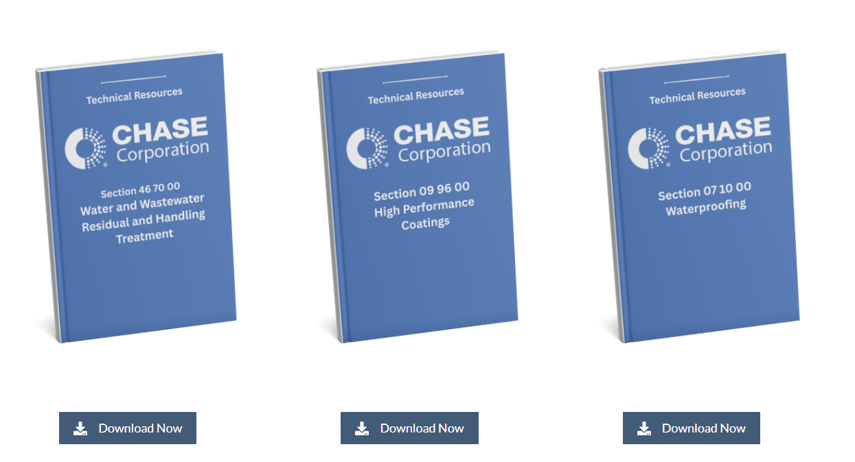
Explore and download the full set of 3-part specifications here:
https://info.chasecorp.com/3-part-spec-download
To request access or connect with our team, visit:
https://info.chasecorp.com/spec-request-form
FAQ
What is a 3-part specification?
A 3-part specification is a standardized CSI document organized into Part 1 (General), Part 2 (Products), and Part 3 (Execution).
Why are precise construction specifications important?
Precise specifications protect design intent, reduce substitution disputes, define performance requirements, and provide measurable installation and acceptance criteria.
What do building envelope waterproofing specifications include?
They identify membrane type, thickness, primers, flashings, and detailing for penetrations, expansion joints, and other transitions.
What is included in a protective coatings specification?
A protective coatings specification defines surface preparation, application rate, cure conditions, film thickness, and performance requirements.
What information should be included in a specification request?
Include the project type, substrate, environmental exposure, system type, applicable standards, project scope, and timeline.
What documentation may be provided after submitting a specification request?
Support may include editable CSI 3-part specifications, product data sheets, test reports, performance information, installation guidance, and material system recommendations.
How do project-specific specifications reduce risk?
They match documentation to the project’s substrate, environment, and performance requirements, helping resolve detailing questions before construction.
How can architects and engineers request construction specifications?
Submit project details through the Specification Request Form to connect with Chase Corporation’s technical team and receive specification resources.