


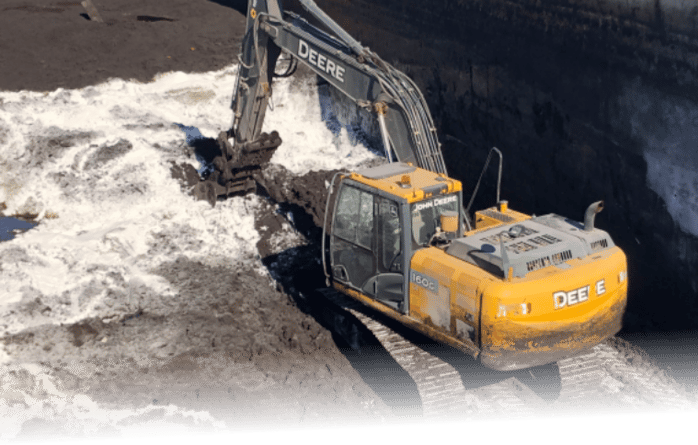
Not every liquid-bearing waste stream responds to the same reagent. This guide walks environmental contractors, remediation firms, and procurement teams through how to match the right ZapZorb® by Zappa-Stewart product to specific waste types, job-site conditions, and disposal requirements.
Why Product Selection Matters in Liquid Waste Solidification
Choosing the right ZapZorb product is the difference between a smooth, cost-effective solidification program and a series of failed batches, rejected loads, and wasted reagent. Liquid waste solidification is not a one-size-fits-all task. A superabsorbent polymer formulated for wastewater sludge will not necessarily perform the same way on oily waste, water-based paint, or high-salinity dredged sediment.
For contractors, engineers, and waste managers, the stakes are practical: the correct product can help you meet the Paint Filter Test, reduce free liquid, and prepare material for transport at the lowest sensible dosage rate. The wrong product can inflate reagent use, add unnecessary weight, and complicate disposal. This article explains where each ZapZorb product fits so you can make an informed, defensible selection for your environmental remediation or industrial project.
What Makes Liquid Waste Streams Different
Before selecting an industrial absorbent polymer, it helps to understand why liquid-bearing waste streams behave so differently from one another. Two loads that both look like wet slurry can require very different solidification strategies.
Key variables that influence product choice and dosage rate include:
- Waste type and chemistry: Wastewater sludge, paint waste, coal ash slurry, and drilling mud each carry distinct chemistries that affect how a polymer hydrates and locks water.
- Moisture and solids content: The amount of free liquid relative to solids determines how much reagent is needed and which product type performs best.
- Salinity and conductivity: High dissolved-salt content can reduce the absorbency of many superabsorbent polymers, changing the effective dose.
- Oils and hydrocarbons: Water-based polymers alone may struggle with oily waste, where a mineral-and-SAP blend may be more appropriate.
- Particle size and mixing method: Fine particles hydrate faster; coarse blends may handle better in loose cleanup. Whether you mix in a pug mill, excavator bucket, or by broadcasting also matters.
- Target consistency and transportation needs: A material that must pass a slump or Paint Filter Test for a specific landfill may need a firmer end result than one simply being staged on-site.
- Disposal facility requirements: Local rules vary, and the receiving facility's acceptance criteria should always guide the target outcome.
Because these factors interact, field testing is recommended before committing to a full-scale approach. The product overviews below are starting points, not guarantees.
ZapZorb Product Selection Guide by Application
The ZapZorb line is built to address a broad range of waste solidification challenges. In practical terms, ZapZorb® Premium may be considered for general industrial waste solidification where high absorbency and reliable performance matter most. ZapZorb® Fine may be considered when fast hydration or a fine particle size helps make quick contact with liquid.
For cleanup-oriented work, ZapZorb® P6 Blend may be considered for spill control and fiber-blend absorption, since the added wood fiber can improve handling and structure. ZapZorb® Paint Hardener may be considered specifically for water-based paint waste, and P2 Blend may be considered for oily or more complex liquid-bearing waste where a mineral absorbent combined with SAP technology can help. Each of these is discussed in detail below, and final selection should always be confirmed through bench and field testing.
ZapZorb® Premium for General Industrial Liquid Waste Solidification
ZapZorb® Premium is a strong starting point for general industrial SAP applications. As a high-performance superabsorbent polymer, it is designed to absorb and lock large volumes of water at low dose rates, which can help reduce hauling weight compared with bulk amendments that add mass.
ZapZorb Premium is commonly considered for a wide range of liquid waste solidification jobs, including:
- Wastewater sludge and general sludge solidification
- Dredged sediment dewatering and sediment staging
- Hydrovac slurry solidification
- Drilling mud solidification for HDD contractors
- Tunnel muck solidification
- Coal ash solidification and other environmental remediation waste streams
Where high absorbency, low dust, and consistent performance are priorities across mixed job conditions, ZapZorb Premium is often the first product teams evaluate. Depending on the waste stream, it may deliver reliable results with minimal added volume, though the optimal dosage rate should still be confirmed through testing.
ZapZorb® Fine for Fast Hydration and Fine Particle Applications
ZapZorb® Fine may be useful when speed of absorption matters. Its smaller particle size increases surface area, which can support faster hydration and quicker contact with liquid-bearing material. This can be an advantage when you need rapid pickup rather than gradual absorption over a longer mixing cycle.
ZapZorb® Fine is commonly considered for applications such as:
- Surface liquid pickup where quick action is needed
- Wet sludge that must be firmed up rapidly
- Loose slurry and thin liquid waste
- Situations where a fine-particle SAP can help make fast contact and absorb free liquid quickly
Because fine particles hydrate quickly, mixing method and dust control should be planned accordingly. Where fast hydration is the priority, ZapZorb® Fine can support a more responsive solidification workflow, depending on the waste stream and site conditions.
ZapZorb® P6 Blend for Spill Control and Fiber-Blend Absorption
ZapZorb® P6 Blend combines superabsorbent polymer with wood fiber, creating a product designed for practical handling and cleanup rather than bulk in-line solidification alone. The fiber component can add structure and bulk that make treated material easier to pick up, contain, and move.
ZapZorb® P6 Blend is commonly considered for:
- Spill cleanup absorbents and rapid spill response
- Loose liquid pickup on the job site
- General job-site cleanup and containment
- Spill kits and bulk absorption applications
The fiber-and-SAP combination can help where the goal is to absorb free liquid while producing a material that handles well with shovels, brooms, or simple mechanical equipment. For teams focused on cleanup and structure rather than pure absorbency, the P6 Blend may be a strong fit depending on the application.
ZapZorb® Paint Hardener for Water-Based Paint Waste Solidification
ZapZorb® Paint Hardener is designed specifically for water-based paint waste, leftover paint, and paint spills. Paint waste behaves differently from typical sludge or slurry, so a purpose-built product for paint waste solidification can help solidify liquid paint so it is easier to handle and prepare for disposal.
ZapZorb® Paint Hardener is commonly considered for:
- Leftover water-based paint at the bottom of cans and containers
- Paint spills and coatings cleanup
- Small-to-moderate volumes of liquid paint waste needing solidification before disposal
It is important to note that disposal rules for paint waste vary by location. ZapZorb® Paint Hardener is designed to help solidify liquid paint, but users should always follow local requirements and confirm acceptance criteria with their disposal facility. Solidifying the material is one step; verifying compliant disposal is another.
P2 Blend for Oily or Complex Waste Streams
P2 Blend combines sodium bentonite with SAP technology, making it a candidate for waste streams that are not purely water-based. Because superabsorbent polymers alone can struggle with hydrocarbons, the mineral component in P2 Blend can help address oils and more complex chemistries.
P2 Blend may be useful for:
- Oily waste and hydrocarbon-bearing material
- Mixed or complex liquid-bearing waste that is not only water-based
- Applications where a combined mineral absorbent and SAP approach may outperform a water-focused polymer alone
When the waste stream includes oils, greases, or variable chemistry, P2 Blend may be worth evaluating. As with every product in the line, the right choice and dose should be confirmed through testing on the actual material.
Why Dosage and Field Testing Matter
Even the best-matched product will underperform at the wrong dose. The correct dosage rate depends on moisture content, solids content, salinity, chemistry, and the target consistency required by your disposal facility. Too little reagent may leave free liquid and fail the Paint Filter Test; too much simply wastes product and adds cost.
This is why field testing is recommended before scaling up. A short bench trial or on-site test can help you:
- Establish a dose-response relationship for your specific waste stream
- Confirm whether the treated material meets slump, solids, or Paint Filter Test criteria
- Validate mixing method and contact time
- Document results for regulators, clients, and the receiving facility
Reviewing the SDS and TDS for each product, and consulting Zappa-Stewart, helps ensure that both product selection and dosage are grounded in data rather than assumption. These steps turn a promising starting point into a repeatable, defensible process.
How Product Selection Can Affect Hauling and Disposal Costs
Product choice is not only a technical decision—it is a cost decision. A high-absorbency industrial SAP such as ZapZorb® Premium can bind large volumes of water at a low dose, which means less added mass and the ability to reduce hauling weight compared with bulk amendments like lime, cement, or sawdust that significantly increase spoil volume.
Selecting the right product can influence total project economics in several ways:
- Fewer truckloads: Minimal added volume can help optimize load weights and reduce the number of hauls.
- Fewer rejected loads: Reliably passing the Paint Filter Test or facility solids criteria reduces the risk of rejection and costly rework.
- Reduced labor: Efficient, low-dose reagents mean less time and effort spent mixing reagent with sludge, lowering labor demands on-site.
- Simpler handling: Fiber blends like P6 can reduce labor and equipment demands during cleanup.
Because disposal is often priced by weight or volume, choosing an efficient product and confirming the dose through testing can meaningfully affect the bottom line, depending on the waste stream and local disposal structure.
Working with Zappa-Stewart to Confirm the Right Product
The recommendations in this guide are intended as starting points, not guarantees. No single ZapZorb product works for every waste stream, and no reagent guarantees disposal approval. Because liquid waste solidification depends on so many variables, the most reliable path is to confirm your selection with the people who formulate the products.
Zappa-Stewart can support your team by helping interpret waste characterization data, recommending candidate products, providing SDS and TDS documentation, and guiding field testing so you can validate both product and dosage rate on your actual material. Whether you are managing wastewater sludge, dredged sediment dewatering, hydrovac slurry solidification, drilling mud solidification, tunnel muck solidification, coal ash solidification, or paint waste solidification, expert guidance helps ensure the choice is grounded in evidence.
Frequently Asked Questions
What is ZapZorb used for?
ZapZorb® by Zappa-Stewart is a line of superabsorbent polymers and absorbent blends used for liquid waste solidification. It is commonly considered for solidifying liquid-bearing waste streams such as wastewater sludge, dredged sediment, hydrovac slurry, HDD drilling mud, tunnel muck, coal ash slurry, oily waste, and paint waste, depending on the specific product and application.
Which ZapZorb product is best for sludge?
For general sludge solidification, ZapZorb® Premium is often a strong starting point because of its high absorbency and reliable performance. ZapZorb® Fine may be considered when faster hydration is needed. Field testing is recommended to confirm the best fit and dose.
Which ZapZorb product should be used for dredged sediment?
ZapZorb® Premium is commonly considered for dredged sediment dewatering and staging because it can bind large volumes of water at low dose rates. The optimal product and dosage depend on moisture, salinity, and solids content, so bench or field testing is recommended.
Which ZapZorb product is best for hydrovac slurry or HDD mud?
ZapZorb® Premium is frequently considered for both hydrovac slurry solidification and drilling mud solidification. For oilier or more complex muds, P2 Blend may be worth evaluating because its bentonite-and-SAP combination can help address waste that is not purely water-based.
Which ZapZorb product is used for water-based paint?
ZapZorb® Paint Hardener is designed specifically for water-based paint waste, leftover paint, and paint spills. It can help solidify liquid paint so it is easier to handle and prepare for disposal, though users should always follow local disposal requirements.
What is the difference between ZapZorb Premium and ZapZorb Fine?
ZapZorb® Premium is a high-absorbency, general-purpose industrial SAP suited to a broad range of liquid waste solidification tasks. ZapZorb® Fine has a smaller particle size that supports faster hydration and quicker contact with liquid, making it useful where rapid absorption is a priority. The best choice depends on how quickly you need absorption and how you plan to mix the material.
What is ZapZorb P6 Blend used for?
ZapZorb® P6 Blend combines superabsorbent polymer with wood fiber and is commonly considered for spill control, loose liquid pickup, job-site cleanup, spill kits, and bulk absorption. The fiber component can improve handling and structure during practical cleanup.
What is P2 Blend used for?
P2 Blend combines sodium bentonite with SAP technology and may be useful for oily waste or more complex liquid-bearing waste streams that are not only water-based. It is worth evaluating when hydrocarbons or variable chemistry are present.
Can ZapZorb help pass the Paint Filter Test?
Depending on the waste stream and the correct dosage, ZapZorb products can help bind free liquid so treated material may meet Paint Filter Test criteria. Results depend on the material, product, and dose, so field testing is recommended and disposal facility requirements should always be verified.
How do I know how much ZapZorb to use?
The right dosage rate depends on moisture content, solids content, salinity, chemistry, and your target consistency. The most reliable approach is bench and field testing on your actual waste, combined with SDS and TDS review and guidance from Zappa-Stewart, to confirm both product and dose.
Get Help Choosing the Right ZapZorb Product
Every waste stream is different, and the best results come from matching the right product to your specific conditions. To discuss your project, request a sample, review product data, or arrange field testing for your liquid waste solidification needs, contact Zappa-Stewart today. Their team can help you confirm the right ZapZorb® product and dosage for your application.