


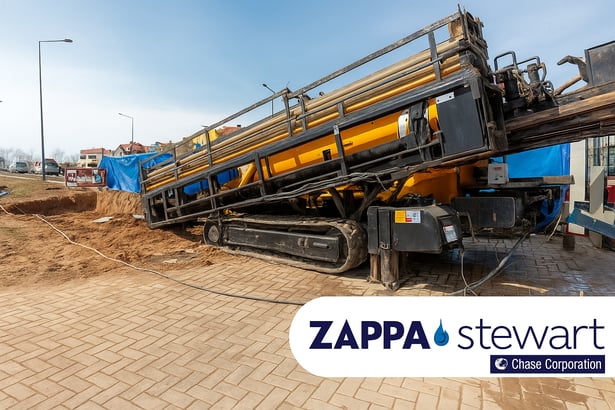
 Hydrovac slurry processing may be costing more than you think. Learn how free-liquid management, bulky amendments, outbound tipping weight, and facility throughput all impact total disposal economics, and why SAP solidification is changing the way processors evaluate wet residual handling costs.
The Hidden Cost of Hydrovac Slurry Processing
In today’s infrastructure, utility, hydro-excavation, and Horizontal Directional Drilling work, profitability depends on how efficiently wet waste streams are handled after they arrive at a processing facility. For hydrovac processors, one of the biggest hidden cost drivers is not always the incoming load itself. It is what happens after wet residuals enter the plant, pit, tank, roll-off, or processing area.
Hydrovac slurry processing does not stop when the truck unloads. Wet residuals can tie up containment space, slow handling, increase amendment demand, add outbound disposal weight, and create free-liquid risks before final disposal.
That is where a processor-focused approach to liquid waste solidification becomes important. The goal is not simply to “dry” the material. The goal is to immobilize free liquid, reduce unnecessary bulking, improve loadability, and help prepare compatible residuals for an approved disposal outlet.
Why the Double Haul Adds Up
The traditional slurry management process typically involves multiple stages:
- Slurry is collected on-site by the hydrovac truck.
-
The material is staged in a pit, tank, box, roll-off, or other approved containment area.
-
Bulking agents such as sawdust, wood chips, corn cobs, lime, gypsum, kiln dust, or similar amendments are added.
-
The treated material is mixed, loaded, hauled, and sent to a landfill or approved disposal location.
The issue is not only that the material is wet. The issue is that processors may be paying to manage, bulk, handle, and dispose of the same waste stream with added weight and volume.
Traditional bulking agents can help manage free liquid, but they can also increase final outbound disposal weight. Since many disposal outlets charge by the ton, the material used to “fix” the waste can become its own cost burden.
The Weight Penalty
Traditional sorbents and bulking agents may help manage free liquid, but they often require high addition rates. In a 100-ton slurry or wet residual example, a 25% sawdust dosage can add roughly 25 additional tons of material before disposal.
By comparison, Superabsorbent Polymer technology can often be used at much lower dosage rates, depending on waste chemistry, solids content, salinity, mixing method, hydration time, and facility acceptance requirements.
That difference can impact:
-
Final tipping weight
-
Number of disposal hauls
-
Amendment storage and handling
-
Plant dwell time
-
Roll-off or box capacity
-
Processor labor and equipment time
-
Retreatment or rejected-load risk
-
Total transport and disposal cost
The full white paper breaks down this comparison in more detail, including a sample cost snapshot and a processor-focused throughput audit framework.
A Different Way to Look at Slurry Management
Superabsorbent Polymer solidification changes the conversation from simply “How do we dispose of this?” to “How do we reduce unnecessary free-liquid friction, added bulk, dwell time, and outbound cost?”
When used appropriately, SAP technology can help immobilize free liquid at low dosage, making compatible hydrovac slurry, wet spoils, HDD mud, and residual sludge more manageable for approved disposal. However, performance depends on the waste stream, site conditions, mixing method, and receiving facility requirements.
Factors such as salinity, pH, hydrocarbons, drilling fluids, organic content, solids concentration, and mixed-source loads can all impact polymer performance. This is why bucket testing, documentation, and facility approval remain essential before production use.
The white paper explains these variables and outlines when ZapZorb® should, and should not, be used as part of a responsible processing strategy.
Why Processors Should Audit the Full Cost Chain
The cost of slurry processing is not limited to product price. A true Processor Throughput Audit should evaluate the full cost chain, including:
-
Amendment dosage
-
Final outbound weight
-
Disposal cost
-
Hauling impact
-
Plant dwell time
-
Mixing method
-
ZapZorb® trial dose
-
Hydration time
-
Facility acceptance
-
Retreatment risk
-
Labor
-
Equipment time
-
Total treated-material cost.
By comparing a traditional bulky-amendment route against a low-dosage SAP solidification approach, processors can better identify where cost, space, and throughput may be lost.
The strongest question is not “Which product costs less?” It is “Which process creates the lowest total treated-material cost while meeting outlet acceptance requirements?”
Download the Full White Paper
The Double Haul is more than a disposal issue. It is a throughput issue, a handling issue, and a total-cost issue.
Download Liquid Waste Solidification for Hydrovac Processors: Reduce Bulking, Dwell Time, and Free-Liquid Risk to see the full cost comparison framework, ZapZorb® vs. traditional bulking analysis, processor workflow considerations, compatibility factors, and project-specific audit checklist.
Download the white paper to learn how Zappa Stewart can help bench-test your waste stream, verify ZapZorb® dosage, screen no-free-liquid performance, and build a defensible ROI comparison using your actual disposal, hauling, labor, and outlet-acceptance assumptions.
ZapZorb® — SAP solidification that fits your facility, not the other way around.
FAQ: Hydrovac Slurry Processing and SAP Solidification
What makes hydrovac slurry processing expensive?
Costs can add up through bulky amendments, added outbound weight, hauling, plant dwell time, labor, equipment use, and final disposal fees.
Why do traditional bulking agents increase disposal costs?
Bulking agents like sawdust, wood chips, corn cobs, lime, gypsum, or kiln dust can add weight and volume to the final disposal load, increasing handling, hauling, and tipping costs.
How does SAP solidification help with hydrovac slurry?
SAP technology helps immobilize free liquid at low dosage in compatible wet residuals, which can improve loadability, reduce unnecessary bulking, and support approved disposal.
Does ZapZorb® replace waste processing or disposal approval?
No. ZapZorb® does not replace waste characterization, testing, treatment, documentation, or disposal facility approval.
What factors can affect SAP performance?
Performance can vary based on salinity, pH, hydrocarbons, drilling fluids, organic content, solids concentration, mixing method, hydration time, and facility requirements.
What is a Processor Throughput Audit?
It is a full cost-chain review that compares amendment dosage, outbound weight, disposal cost, hauling, dwell time, labor, equipment use, and total treated-material cost.
How can processors determine whether ZapZorb® is a good fit?
Processors should start with a representative sample and bucket trial to confirm dosage, performance, and facility acceptance before production use.