

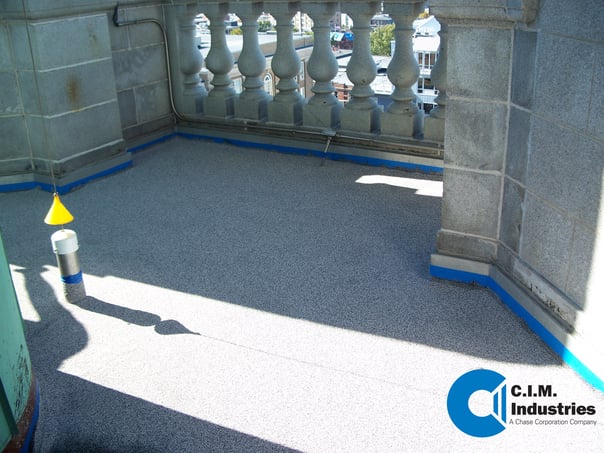
 Exposed concrete does not require a choice between reliable waterproofing and a refined architectural finish. A coordinated coating system can preserve the performance of the waterproofing assembly while adding durable, intentional color to visible surfaces.
When Waterproofing Performance Is Only Part of the Specification
For fountains, rooftop terraces, podium structures, balconies, and parking decks, waterproofing performance remains the primary requirement. Once the appropriate base waterproofing system has been selected, however, the specification must also address how that system will perform as an exposed architectural surface.
Color, UV exposure, finish consistency, staining, traffic, and long-term maintenance can all affect whether the completed surface supports the original design intent. CIM's base waterproofing layer is typically black and is UV stable, providing the necessary waterproofing performance even when exposed. However, it may not provide the color or finished appearance required for a high-profile architectural application.
CIM Color Shield™ Topcoat is also UV stable and is designed to enhance compatible CIM waterproofing coatings with a controlled, uniform color finish that resists UV-related fading, chalking, and yellowing. Rather than supplying UV protection that is absent from the base layer, the topcoat gives architects greater control over the appearance and color stability of exposed waterproofed surfaces.
For experienced architects, specifiers, engineers, and contractors, the key question is not how liquid-applied waterproofing works. It is how to coordinate the waterproofing layer and color finish so they perform as one system—without compromising adhesion, flexibility, durability, or appearance.
The Role of a Color Topcoat over Waterproofing
A color topcoat should be treated as a functional component of the coating assembly, not simply as decorative paint. Applied over a compatible, UV-stable waterproofing base, it adds a controlled architectural finish that is also UV stable and helps resist color change.
This division of roles is important:
- The waterproofing base coat provides the continuous barrier, adhesion, elastomeric performance, and UV stability required to manage water exposure, concrete movement, and exterior exposure.
- The color topcoat provides a UV-stable, uniform color finish and a more refined appearance for surfaces that remain visible.
Together, the layers allow waterproofing performance to remain the first priority while giving architects greater control over how the protected surface contributes to the overall design.
Why Compatibility Matters
The success of a layered coating assembly depends on chemical and mechanical compatibility. The topcoat must bond properly to the waterproofing layer and accommodate its movement without separating, cracking, or interfering with performance.
Using products designed to work together helps reduce the risk associated with combining unrelated coatings in the field. A coordinated system aligns adhesion and expansion behavior so the finished assembly can respond more consistently to thermal cycling, structural movement, and environmental exposure.
For specifiers, this means the waterproofing and finish should be evaluated as a complete assembly. Color selection matters, but it comes after confirming that the topcoat is compatible with the selected waterproofing base and appropriate for the project's exposure conditions.
Color Stability on Exposed Concrete
Visible waterproofed surfaces are often exposed to sustained sunlight, moisture, cleaning, and regular use. Although CIM's black base waterproofing layer is UV stable, a color finish must also withstand these conditions to maintain a consistent architectural appearance over time.
CIM Color Shield Topcoat uses UV-stable pigments, UV-absorbing chemistries, and elastomeric binders to help the color finish resist fading, chalking, and yellowing. The result is a surface that reads as an intentional architectural element rather than a visible black waterproofing membrane.
This is especially important in design-sensitive applications such as decorative fountains, water features, terraces, balconies, parking decks, and podium structures, where the waterproofed surface remains part of the public-facing design.
Balancing Appearance with Project Exposure
The desired appearance should be considered alongside the conditions the coating system must withstand. Before selecting the finish, identify whether the surface:
- Holds water or experiences frequent wetting
- Receives sustained UV exposure
- Supports pedestrian or vehicle traffic
- Encounters chemicals, staining, or regular cleaning
- Includes transitions, penetrations, drains, joints, or complex details
These conditions influence both the waterproofing requirements and the performance expected from the topcoat. A successful specification addresses the complete exposure profile rather than treating color as an isolated selection.
What This Means for Architects and Specifiers
1. Waterproofing remains the primary performance decision
Select the base system according to water exposure, substrate conditions, movement, detailing, UV exposure, and other project-specific requirements. The finish layer should enhance the appearance of that system, not redefine or compensate for its performance.
2. The finish should be specified as part of the assembly
Identify a topcoat formulated to bond with the selected waterproofing base. This reduces the uncertainty associated with unrelated product combinations and helps the layers move and perform together.
3. Color should respond to the exposure conditions
For visible exterior surfaces, specify a color-stable, UV-resistant finish designed to resist fading, chalking, and yellowing. This helps preserve the intended appearance beyond initial installation.
4. Mock-ups should evaluate the complete system
Use full-system mock-ups to review color, texture, finish consistency, adhesion, and detailing under actual site conditions. Evaluating the full assembly before broad application can help reduce rework on design-sensitive projects.
5. Maintenance belongs in the original specification
Define cleaning expectations, inspection intervals, recoat planning, and applicable warranty requirements at the specification stage. Long-term appearance depends on maintaining the finish as intentionally as the waterproofing layer beneath it.
How to Specify a Waterproofing and Color System
- Define the exposure. Document water, UV, traffic, chemical, cleaning, and environmental conditions for each coated area.
- Select the waterproofing base. Confirm that the system meets the project's requirements for adhesion, permeability, movement, and water exposure.
- Choose a compatible color topcoat. Specify a topcoat formulated for the selected waterproofing layer and suited to the required UV resistance and finish quality.
- Establish the visual standard. Define color, texture, sheen, uniformity, and acceptable appearance through the specification and approved mock-up.
- Set surface-preparation and quality-control requirements. Include cleaning, profiling, crack repair, moisture limits, application conditions, and acceptance criteria.
- Detail transitions and penetrations. Coordinate drains, joints, flashing, edges, and penetrations so the finish does not distract from the waterproofing details that protect the assembly.
- Plan for lifecycle maintenance. Include cleaning practices, inspections, and anticipated recoating so both performance and appearance can be maintained over time.
Frequently Asked Questions
Does a color topcoat replace the waterproofing layer?
No. The UV-stable waterproofing base remains responsible for water resistance, adhesion, and movement accommodation. CIM Color Shield Topcoat is applied over a compatible CIM waterproofing coating to add a UV-stable, uniform color finish and a refined architectural appearance.
Why specify a coordinated system instead of painting over the membrane?
The topcoat must bond to the waterproofing layer and move with it. Pairing products designed to work together helps reduce the risk of poor adhesion, incompatible expansion behavior, cracking, or delamination.
How does Color Shield Topcoat support long-term appearance?
Its UV-stable pigments, UV-absorbing chemistries, and elastomeric binders help the color finish resist fading, chalking, and yellowing from sun exposure. The topcoat supports the long-term appearance of the color finish, while the CIM waterproofing layer remains UV stable on its own. Maintenance and recoat expectations should still be defined in the project specification.
Where is a color topcoat most valuable?
It is especially valuable where the waterproofing system remains visible and contributes to the finished design, including fountains, water features, terraces, balconies, parking decks, and podium structures.
What should be reviewed in a project mock-up?
The mock-up should include the complete waterproofing and topcoat assembly. Review color, texture, sheen, uniformity, adhesion, transitions, penetrations, and other representative details under actual site conditions.
How should color be addressed in the specification?
Treat color as part of the complete coating assembly. Define the visual standard, identify the compatible topcoat, account for the project's exposure, and include maintenance expectations rather than leaving the finish as a field decision.
A Complete Approach to Exposed Waterproofed Concrete
For exposed architectural concrete, a successful specification begins with the right waterproofing system. The next step is ensuring the protected surface also meets the project's aesthetic and environmental demands. By pairing UV-stable CIM waterproofing coatings with the UV-stable CIM Color Shield Topcoat, architects and specifiers can address water resistance, movement, color stability, and finish quality within one coordinated assembly. The result is waterproofing that performs as required while providing an intentional color finish wherever it remains visible.
Key Concepts
-
Color-Stable Topcoat: A durable, UV-stable finish coat applied over compatible waterproofing to provide uniform color and resist UV-related fading and degradation of the finish.
-
Coordinated Coating System: A waterproofing base and compatible topcoat specified to perform together as one assembly.
-
Chalking: Powdery surface degradation caused by the breakdown of coating resins under UV exposure.
-
Delamination: Separation between coating layers caused by poor adhesion or incompatibility.
-
Elastomeric Flexibility: The ability of a cured coating to stretch and recover as the substrate moves.
-
Substrate Preparation: Cleaning, profiling, and repair performed before coating application to support adhesion and performance.
-
UV Resistance: The ability of a coating to withstand ultraviolet exposure without significant fading, yellowing, or film degradation.
