


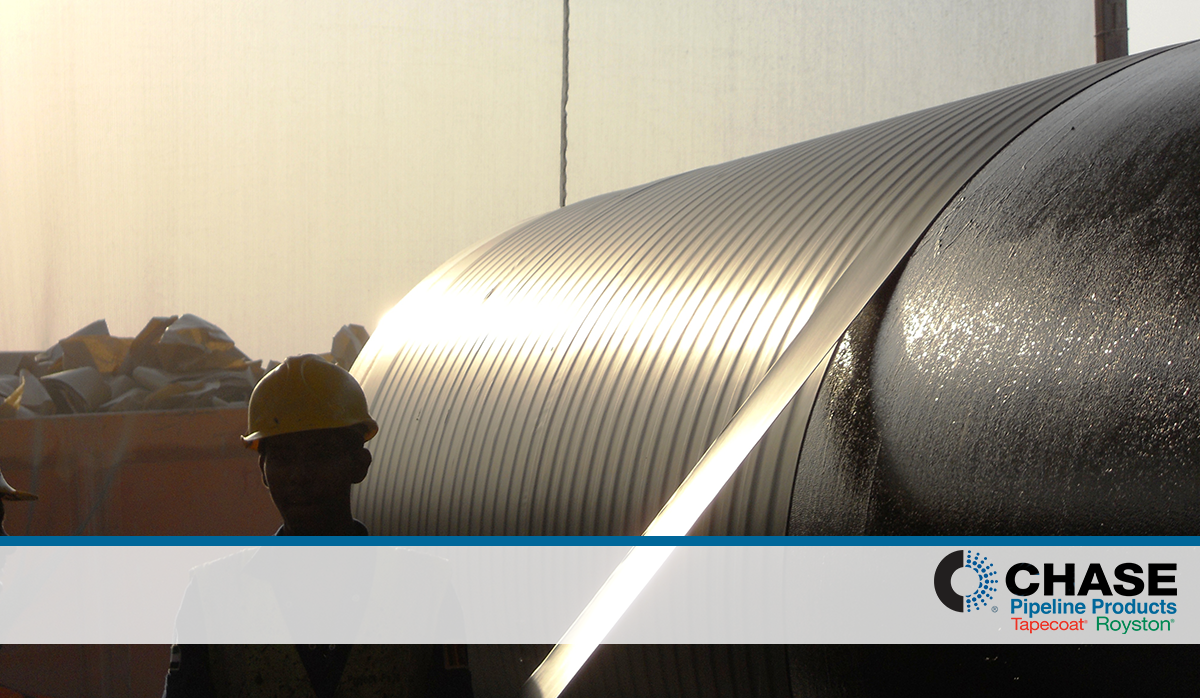
Protective coating technology quietly determines whether an asset survives decades of exposure or fails in months. Here is the mechanism behind the barrier.
Why Protective Coatings Matter Now
A protective coating is an engineered barrier that isolates metal and sensitive components from moisture, salts, and biological contaminants that drive corrosion and failure. From buried pipelines carrying gas and water to on-body electronics exposed to perspiration, every surface sits under constant electrochemical and environmental attack.
Unlike older "apply-and-forget" methods, modern coatings are layered, measurable systems designed to resist moisture, mechanical stress, and electrical disbondment for years. For integrity engineers, materials scientists, and product designers, this means fewer unplanned failures, lower lifecycle cost, and defensible compliance records.
In this guide you will learn how corrosion actually occurs, how barrier coatings and primers build protection, why dielectric strength and breathable membranes matter, and how to apply and validate these systems. By the end, you will understand the mechanisms behind coating performance and be able to teach them to colleagues and clients.
The Corrosion Mechanism
Corrosion is the electrochemical process in which refined metal returns to a more stable oxidized state, consuming the metal in the reaction. On steel this produces iron oxide—rust—which thins the wall and weakens structural integrity over time.
Think of corrosion as a tiny, self-powered battery forming on the metal surface. Wherever moisture, oxygen, and dissolved salts meet bare metal, an anode and a cathode develop, and electrons flow between them exactly as inside a battery cell.
The mechanism needs four elements working together: an anode, a cathode, a metallic path, and an electrolyte such as wet soil or sweat. When all four are present, metal ions dissolve at the anode, electrons migrate, and the reaction continues until the metal is consumed or the circuit is broken.
This means the most effective defense is simple in principle: block the electrolyte's access to metal. A coating that isolates the surface from moisture interrupts the corrosion cell before it can form.
Barrier Coating Systems
Barrier coating is a protective layer applied directly to metal or electronic assemblies to seal out moisture, salt, and contamination. It ranges from thin conformal films on circuit boards to flexible, adhesive-backed tapes wrapped around pipe surfaces at ambient temperature.
Think of a barrier coating as a waterproof bandage or a transparent raincoat for a vulnerable surface—thin, conforming, and tailored to follow every contour so nothing is exposed to the elements.
Mechanically, coatings are dispensed, brushed, or wrapped, then cured or compressed to form a continuous dielectric film. The layer adheres to the surface, fills microscopic crevices, and isolates metal and solder joints from the electrolytic pathways that corrosion needs. Multi-layer tape systems add an inner moisture barrier and an outer mechanical layer that resists soil stress and handling damage.
This means teams can prevent short circuits and wall-thickness loss without excessive bulk, enabling longer service life and consistent, inspectable application quality—even in remote locations without power or heat.
Primer and Adhesion
Primer is the liquid foundation layer applied to clean metal before a coating, engineered to improve adhesion by chemically linking the surface to the coating's adhesive compound.
Think of primer as the double-sided tape behind a wall hook. Without it, even a strong hook slides off a smooth surface; with it, the bond grips tightly and resists peeling under load.
Mechanically, primer penetrates the microscopic profile left by abrasive cleaning, displaces trace moisture, and creates a high-energy surface the adhesive can grab. This bond is what resists cathodic disbondment—the tendency of a coating to lift at its edges when protective electrical current is applied.
This means surface preparation and primer selection are not optional details but the primary drivers of long-term adhesion. A perfect coating over a poorly primed surface will still fail at the interface.
Dielectric Strength and Cathodic Protection
Dielectric strength is a coating's ability to resist the passage of electrical current, measured as the voltage it can withstand before electrical breakdown occurs across its thickness.
Think of dielectric strength as the thickness and quality of insulation around a wire. Strong insulation keeps current flowing where it should; weak insulation allows leakage that wastes energy and causes damage.
Many buried assets also use cathodic protection (CP), a technique that applies a small protective current to suppress corrosion. A coating with strong dielectric properties concentrates that current onto tiny coating defects only, dramatically reducing the CP system's workload.
This means a high-quality coating and a CP system are partners, not rivals. The coating provides the primary barrier, and CP protects only the small exposed areas, extending both the asset's life and the efficiency of the protection budget.
Hydrophobic Membranes and Acoustic Transparency
Hydrophobic membrane is a porous or treated material engineered to repel liquid water while allowing air, vapor, and sound to pass through with minimal resistance.
Think of a hydrophobic membrane as the breathable rain shell of technical fabrics—letting air through while stopping liquid droplets at the surface.
The mechanism uses surface chemistry and pore geometry: pores are sized and treated so surface tension prevents liquid intrusion, while gases and sound waves pass with little impedance. Fluorinated or silicone chemistries maintain repellency under pressure over time.
For devices that must breathe or transmit sound, this means internal cavities and microphone ports can be protected without being fully sealed, preserving function while reliably excluding liquid at critical ingress points.
Environmental Sealing
Environmental sealing is the system-level integration of gaskets, adhesives, vents, and interface designs that prevent contaminant ingress across seams and openings.
Imagine environmental sealing as the zipper and gasket on a reusable lunchbox—properly sized and compressed, the seal keeps contents in and spills out.
At the system level, sealing uses elastomeric gaskets, compressive features, pressure-equalization vents, and bonded adhesives to create multi-barrier protection. Design choices balance compression force, material resilience, and manufacturing tolerances for consistent results across production units.
This means predictable field performance: reduced variability between units, simpler maintenance, and functional ports and interfaces that survive exposure without failure.
How This Differs from Traditional Approaches
- Traditional approach: Hot-applied or bulk-potting coatings that need flame, heat, or long curing and often block all exchange.
- New approach: Ambient, cold-applied and targeted coatings that install safely anywhere and, where needed, preserve breathability or sound transmission.
- Traditional approach: Single-layer fresh-water tests that ignore real contaminants.
- New approach: Multi-factor validation with saline, protein-rich fluids, and thermal cycling, because electrolytes and organics accelerate corrosion differently than clean water.
- Traditional approach: Factory coatings that cannot easily protect field welds, fittings, or irregular geometries.
- New approach: Conformable systems selected for chemical compatibility that wrap complex shapes and seal joints others leave vulnerable.
- Traditional approach: Repairs requiring specialized equipment and skilled operators.
- New approach: Field-repairable systems that simplify maintenance and support lifecycle cost planning.
What This Means for Technical Teams
- Specifications should prioritize moisture isolation and include biological-exposure tests, not just water-ingress ratings, to reflect real failure modes.
- Surface preparation becomes a measurable acceptance criterion, preventing adhesion failures caused by contamination before coating begins.
- Dielectric strength lets you design coating and cathodic protection as one coordinated system, lowering current demand and extending both.
- Matching the coating to its environment—soil stress, temperature, chemistry, or acoustics—reduces premature failures and warranty disputes.
- Treating coatings as repairable shifts maintenance from replace-on-failure to preventive, lifecycle-based planning.
How to Select, Apply, and Inspect a Protective Coating
- Define the service conditions. Identify the substrate, operating temperature, moisture exposure, chemicals, and potential mechanical damage. For buried pipelines, include soil conditions and cathodic-protection requirements.
- Select a compatible system. Review current technical documentation to confirm suitability. Specify the coating, primer where required, and any additional mechanical protection as a complete system.
- Prepare the substrate. Remove contaminants and achieve the cleanliness and surface profile specified by the manufacturer. Inspect the prepared surface before coating begins.
- Apply according to product instructions. Follow requirements for mixing, primer application, coating thickness, tape overlap, and wrapping tension as applicable. Observe application-temperature limits and any curing or recoat windows.
- Inspect before covering or returning to service. Check coverage, seams, transitions, and visible defects. Complete any specified thickness, adhesion, or holiday testing using procedures appropriate for the selected system.
- Document and maintain the protection. Record products, application conditions, inspection results, and repairs. Plan future inspections around the asset’s exposure and maintenance needs.
Key Concepts Defined
- Protective Coating: A material applied to help protect a substrate from damaging environmental exposure.
- Corrosion: Deterioration of metal through chemical or electrochemical reactions with its environment.
- Barrier Coating: A protective layer that limits contact between the substrate and moisture or other corrosive substances.
- Substrate: The underlying surface receiving the coating.
- Primer: A compatible preparatory treatment used to support adhesion where required.
- Dielectric Strength: The electric field a material can withstand before electrical breakdown.
- Cathodic Protection (CP): An electrochemical method used to reduce metal corrosion.
- Cathodic Disbondment: Loss of coating adhesion associated with electrochemical reactions under cathodic protection.
- Holiday: A coating discontinuity that exposes the underlying substrate.
Frequently Asked Questions
How do protective coatings help prevent corrosion?
Barrier coatings limit the metal’s contact with moisture and other corrosive substances. Performance depends on selecting a suitable system and maintaining proper adhesion and coverage.
How do I choose between a tape system and a liquid-applied coating?
Consider surface geometry, preparation requirements, service exposure, installation access, and curing conditions. Evaluate the complete system against the project specification and manufacturer’s guidance.
Does every protective coating require a primer?
No. Some systems require a separate primer, while others do not. Follow the selected product’s instructions rather than assuming one primer requirement applies to all coatings.
Can coatings be applied to damp or wet surfaces?
Only when the product specifically permits those installation conditions. Suitability for wet service does not automatically mean a coating can be installed on wet steel.
Does high dielectric strength guarantee compatibility with cathodic protection?
No. Dielectric strength alone does not establish CP compatibility. Coating selection should also consider cathodic disbondment performance and the potential for disbonded coating to shield the substrate from protective current.
Can damaged protective coatings be repaired?
Many systems support localized repairs. The repair method depends on the coating, substrate condition, and compatibility with the existing material. Follow the manufacturer’s preparation and repair procedures.
Select Protection for the Actual Exposure
Effective corrosion protection starts with understanding the asset’s environment. Surface preparation, product compatibility, application quality, inspection, and maintenance all contribute to coating performance.
For pipeline and infrastructure projects, consult the TapeCoat team to evaluate coating options and application requirements.
Contact Chase Corporation for help selecting a protective coating system for your project.