

Corrosion-protection tapes have been trusted worldwide for their proven corrosion protection and...
Cold-applied tape coating is reshaping how engineers protect pipelines, buried assets, and submerged steel. Here is the mechanism you need to know.
Why Tape Coating Systems Matter Now
Aging infrastructure and tighter integrity regulations are transforming how corrosion engineers protect buried and submerged steel. Picture a pipeline field joint, the uncoated weld zone where two factory-coated pipes meet. That joint faces moisture, soil chemistry, and mechanical stress in quick succession, often in trenches where heat and ovens cannot go.
Unlike factory-applied plant coatings that require heat and controlled environments, cold-applied tape coating systems let crews rehabilitate joints, fittings, and valves on-site with hand tools. For corrosion engineers, pipeline integrity specialists, and coating applicators, this means reliable protection in trenches, splash zones, and remote right-of-ways.
In this guide, you will learn how cold-applied tape coatings work, the role of primers and adhesion, the logic of multi-layer systems, how cathodic disbondment resistance is measured, and how petrolatum tapes differ from polymeric tapes. By the end, you will understand the mechanism behind each layer and be able to specify or explain a system with technical confidence.
Product Highlight: H50
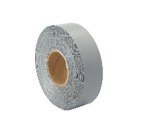 Tapecoat H50 [Shop Here] is a cold-applied corrosion-protection tape designed for above- and below-ground metal substrates, including pipe, bends, tees, and metal structures. Its flexible backing and integrated primer support field application without heat activation. A separate primer may be needed depending on application temperature and project requirements.
Cold-Applied Tape Coating
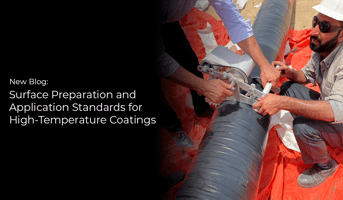
Cold-applied tape coating is a corrosion-prevention method in which a flexible adhesive tape is wrapped around a prepared metal substrate at ambient temperature, without flame, ovens, or curing equipment.
Think of it as wrapping a protective bandage around steel. Just as a bandage conforms to a joint and seals out contaminants, the tape conforms to irregular pipe geometry and creates a barrier against moisture and oxygen, two of the primary factors in corrosion.
Mechanically, the tape consists of a carrier backing bonded to a pressure-sensitive or butyl adhesive layer. Applied over a primer with controlled tension and overlap, the adhesive flows into surface profiles and displaces air, forming a continuous, watertight dielectric barrier that isolates steel from the surrounding electrolyte.
This means corrosion protection can be installed in the field within the temperature window the product specifies, reducing downtime and avoiding the fire-safety concerns of hot-applied alternatives.
Primer and Surface Adhesion
Primer is a liquid formulation applied to the cleaned substrate before taping, designed to promote chemical bonding between the steel surface and the tape adhesive.
Think of primer as the double-sided glue layer in a laminate. Without it, two surfaces may touch but never truly unite; with it, they bond into a single system that resists peeling and water migration.
The mechanism works through surface wetting and tackifying chemistry. Surface energy—the molecular energy that governs how a liquid spreads—determines how well the primer penetrates micro-pores left by blast cleaning. The primer then partially fuses with the tape adhesive at the interface, creating a continuous bridge that eliminates a disbondment pathway for moisture.
For applicators, this means surface preparation and primer selection directly determine coating life. A tape applied over an unprimed or contaminated surface may look complete but will fail at the interface long before the carrier backing degrades.
Multi-Layer Protection System
A multi-layer protection system is a coating architecture that combines a primer, an inner corrosion-prevention tape, and an outer mechanical-protection tape into one engineered defense.
Think of it as dressing for harsh weather in layers: a base layer manages moisture against the skin, while an outer shell absorbs abrasion and impact. Each layer does one job well, and together they outperform any single thick layer.
In operation, the inner tape delivers the dielectric and adhesive seal directly against the primed steel, while the outer wrap adds puncture resistance, ultraviolet (UV) shielding, and backfill protection. The layers are applied with calculated overlap—often 50 percent or more—so no single seam becomes a weak point.
This means protection can be tuned to the threat. A buried joint facing rocky backfill gets a tougher outer layer, while a submerged fitting prioritizes water resistance, all from the same modular approach.
Cathodic Disbondment Resistance
Cathodic disbondment is the loss of adhesion between a coating and metal caused by hydrogen and hydroxide ions generated at the steel surface when a cathodic protection (CP) current is applied.
Think of it as a tug-of-war beneath the coating. The electrochemical reaction at the steel surface constantly pries at the adhesive bond from below, and a coating must resist that force to stay sealed over decades.
The property is tested in laboratory cells where a coated, intentionally damaged sample is immersed in electrolyte under impressed current. Engineers measure how far the coating peels back from the defect over a set time and temperature; a smaller disbondment radius means stronger resistance.
This means a tape coating must be compatible with cathodic protection rather than fighting it. A system with low cathodic disbondment lets CP and coating work together—the coating handles most of the area while CP defends the inevitable small defects.
Petrolatum and Petroleum Wax Tape
Petrolatum tape is a corrosion-prevention tape in which a non-woven carrier is saturated with a petrolatum or petroleum-wax compound that remains soft and self-healing throughout service.
Think of it as a grease-soaked cloth that never dries out. Because the compound stays pliable, it continuously fills gaps and reseals minor disturbances, much like a thick ointment that flows back over an exposed spot.
The mechanism relies on displacement rather than hard adhesion. The saturant displaces water and air from the surface, including surfaces that are damp or minimally prepared—and the wax matrix conforms around bolts, flanges, and complex shapes where rigid coatings crack.
This means petroleum tape excels on irregular fittings and tolerant surface conditions, while polymeric cold-applied tapes serve straight pipe runs needing higher mechanical and dielectric strength.
How Cold-Applied Tape Differs from Hot-Applied Coatings
Understanding the contrast between cold-applied tape systems and hot-applied or fusion-bonded coatings clarifies when each approach fits.
- Hot-applied approach: Requires heat, specialized equipment, and controlled conditions, which limits field use.
- Cold-applied approach: Installs at ambient temperature with hand tools, enabling on-site joints and repairs.
- Hot-applied approach: Excels in factory plant-coating environments with consistent quality control.
- Cold-applied approach: Excels at field joints, fittings, and rehabilitation where ovens cannot reach.
- Hot-applied approach: Rigid films can crack over complex geometry and sharp transitions.
- Cold-applied approach: Conformable tapes wrap valves, bends, and flanges without cracking.
- Hot-applied approach: Rework often requires removal and reheating.
- Cold-applied approach: Damaged sections can be re-wrapped quickly in place.
What This Means for Corrosion Engineers
- Surface preparation drives outcomes. This means specifying the correct cleanliness and profile is as important as the tape itself, because adhesion fails first at a contaminated interface.
- Cathodic protection compatibility is non-negotiable. As a result, selecting coatings with documented low cathodic disbondment prevents conflict between your coating and your CP system.
- Threat-matched layering reduces cost. This means you apply tougher outer wraps only where backfill or impact demands it, rather than over-engineering every joint.
- Product chemistry should match substrate conditions. For damp or irregular surfaces, petrolatum systems reduce prep failures; for straight runs, polymeric tapes maximize dielectric strength.
- Documentation becomes part of the reliability baseline. As a result, recording surface standards, overlap, and inspection criteria helps suppliers and crews reproduce quality at scale.
How to Apply a Tape Coating System
- Assess the substrate and environment. Identify temperature, moisture, backfill, and whether cathodic protection is present, because these dictate the system class you select.
- Prepare the surface. Clean to the specified standard and establish the correct profile so the primer and adhesive can bond mechanically and chemically.
- Apply primer evenly. Allow the primer to reach the manufacturer-specified tack so the adhesive bridge forms completely across the interface.
- Wrap the inner tape with controlled tension and overlap. Maintain consistent spiral geometry to produce a continuous dielectric barrier with no voids.
- Add outer protection and inspect. Apply the mechanical-protection layer, then verify overlap, continuity, and holiday-free coverage before backfill or immersion.
Key Concepts Defined
- Cathodic Disbondment: Loss of coating adhesion caused by hydroxide and hydrogen generation at a steel surface under cathodic protection current.
- Cold-Applied Tape Coating: Protective tape installed without heat to help prevent metal corrosion.
- Substrate: The surface receiving the coating.
- Primer: A treatment that improves tape adhesion when required by the system.
- Dielectric Barrier: An electrically insulating layer that separates metal from its environment.
- Overlap: The portion of tape covering the previous wrap to maintain continuous protection.
- Cathodic Protection (CP): An electrochemical method used to reduce metal corrosion.
- Holiday: A gap or defect in a coating that exposes the substrate.
- Petrolatum or Wax Tape: A flexible, compound-saturated tape used to protect metal, including irregular fittings.
Frequently Asked Questions About Tapecoat Corrosion Protection Products
Do all cold-applied tapes require primer?
No. Some require a separate primer; others have integrated primer properties. Follow the product’s application instructions.
Can tape be applied over rust or damp steel?
Only if the selected system permits it. Remove contaminants and prepare the surface as specified.
How much overlap is needed?
Requirements vary by product. A 50 percent overlap is common in some systems, but always follow the manufacturer’s guidance.
Is an outer wrap necessary?
Some systems require additional mechanical protection; others provide it within a single tape. Exposure and backfill conditions determine the need.
Can tape coatings work with cathodic protection?
Yes, when appropriately selected. Review the system’s performance data and CP compatibility for the intended application.
Can cold-applied tape be installed in cold weather?
Yes, within its specified application-temperature range. “Cold-applied” means installation without heat activation, not suitability for every temperature.