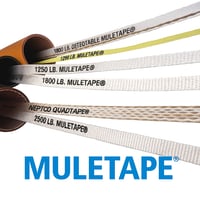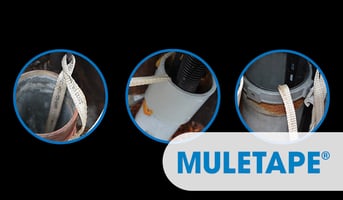


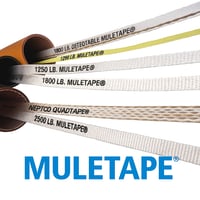
Our Since its creation in 1982, MULETAPE® has defined what strength, consistency, and innovation...
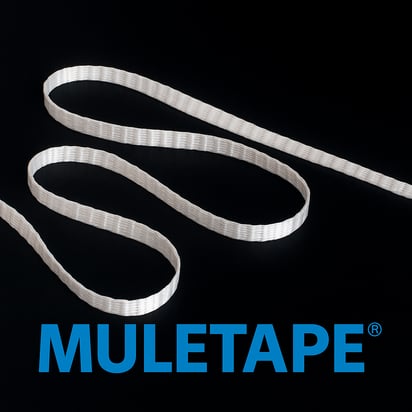
Low-elongation pull tape (Muletape®) reduces snap-back risk, friction, and rework—often delivering faster installs and lower total cost than rope, especially on long routes and tight bends.
Pull Tape vs. Pulling Rope: What’s Safer, Cheaper & Easier?
If you’re still deciding between pull tape and rope, consider what matters most on site: safety, speed, and total installed cost. Pull tape—especially the original Muletape®—was engineered for conduit pulls: flat, low-elongation, pre-lubricated, footage-marked, splice-free. That combination reduces snap-back risk, lowers force, and speeds fishing and pulling compared to rope.
Safety First — Low-Elongation vs. Stretch
- Rope stretches and can store energy, leading to dangerous snap-back.
- Muletape® is low-elongation, minimizing stored energy and reducing snap-back risk to crews and equipment.
Force, Friction & Duct Burn
- Muletape®’s flat profile helps distribute pulling force over a wider contact area.
- Its integrated lubrication helps reduce friction and heat buildup, minimizing the risk of duct burn during installation.
Speed & Productivity Gain
-
Blows/fishes faster: Flat, lightweight tape moves easily with standard mice.
-
Footage markings: Track as you go; avoid over- or under-pulling.
-
Splice-free lengths: Fewer interruptions and mid-pull failures.
Total Cost (Not Just Price per Reel)
Contractors report savings from:
- Reduced labor time through fewer restarts and smoother pulls
- Reduced need for additional lubricant thanks to integrated lubrication
- Fewer failures and less rework with splice-free lengths and low elongation
- Less damage to cable jackets and duct
When Rope Still Shows Up (and Why Tape Wins Anyway)
Rope remains common out of habit or availability. But for underground conduit, engineered pull tape nearly always outperforms on safety, force, and install speed—especially as routes get longer and more complex.
FAQ'S
Q1. Can pull tape be blown or vacuumed?
Yes—Muletape® blows or vacuums fast with standard mice.
Q2. Is external lubricant still helpful with pull tape?
Yes. While Muletape® is pre-lubricated, additional lubricant can help reduce friction on long runs, tight bends, or rough conduit.
Q3. How do I choose break strength?
Use the [Muletape® Selection Guide]—match route, cable, and conduit.
Q4. Will pull tape reduce snap-back risk vs rope?
Muletape’s low-elongation design reduces stored energy—safer than high-stretch rope.
Q5. Does tape help with duct burn?
Yes—the flat profile + silicone help lower COF and spread heat vs. round rope.
Q6. Reuse policy?
Treat pull tape as single-use for safety