Skip to content

  • There are no suggestions because the search field is empty.
HumisealLogoforBlogpage

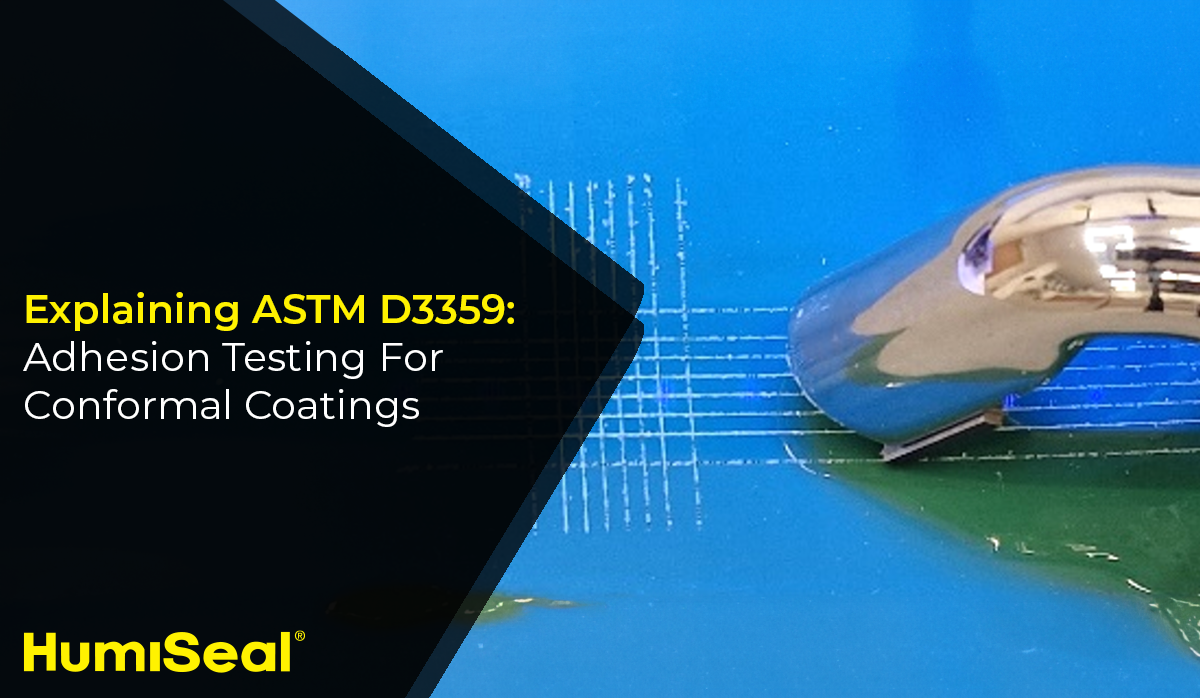
Explaining ASTM D3359: Adhesion Testing for Conformal Coatings

Posted by Vlad David on 4/24/2024

Conformal coatings offer tremendous protection to printed circuit board assemblies, but this assumes they properly adhere to the PCB. Application errors are all too common, causing delamination and otherwise poor adhesion of the material. So before producing at scale, you should routinely conduct adhesion tests to validate the integrity of your production processes.

Read More

Topics: Adhesives, adhesion test

Ruggedization of Electronic Circuits? Encapsulation is One of The Best-kept Protection Secrets

Posted by Vlad David on 10/25/2023

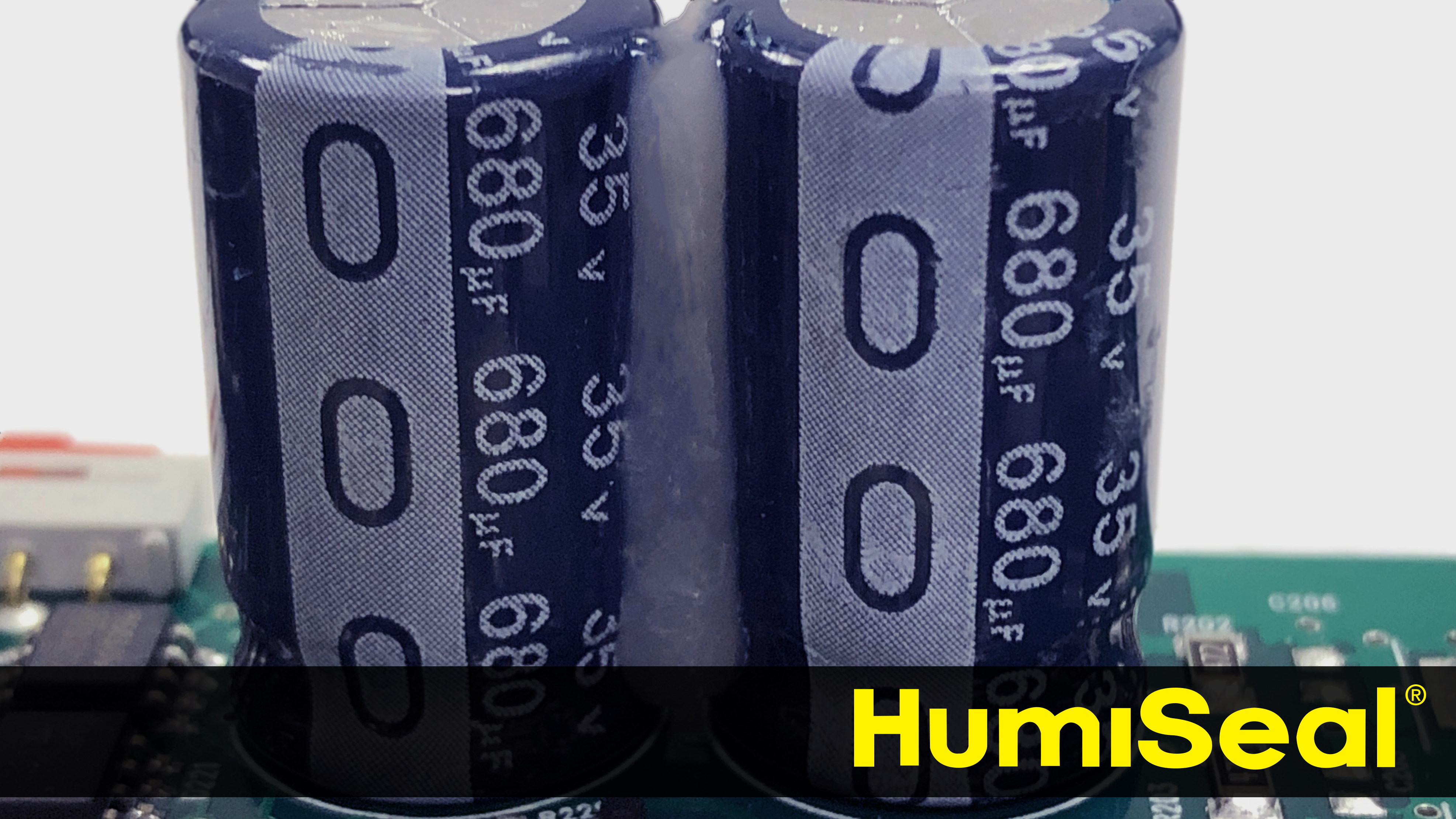
It's no secret that conformal coatings increase the lifetime of electronic devices by providing a thin barrier that strengthens their ability to withstand harsh environmental conditions. That said, a lesser-known truth is adhesives and encapsulants provide a significantly higher level of protection on the entire assembly.

Why is that? Well, adhesives and encapsulants promote assembly protection by:

  • creating environmental seals that protect against moisture and corrosion
  • providing high-temperature resistance
  • increasing shock and vibration-dampening
  • generating strong bonds to a variety of substrates
  • maintaining low shrinkage
  • offering thermal conductivity

Bury it in

Read More

Topics: Electronic Protection, Adhesives, Vibration Suppression, Encapsulants

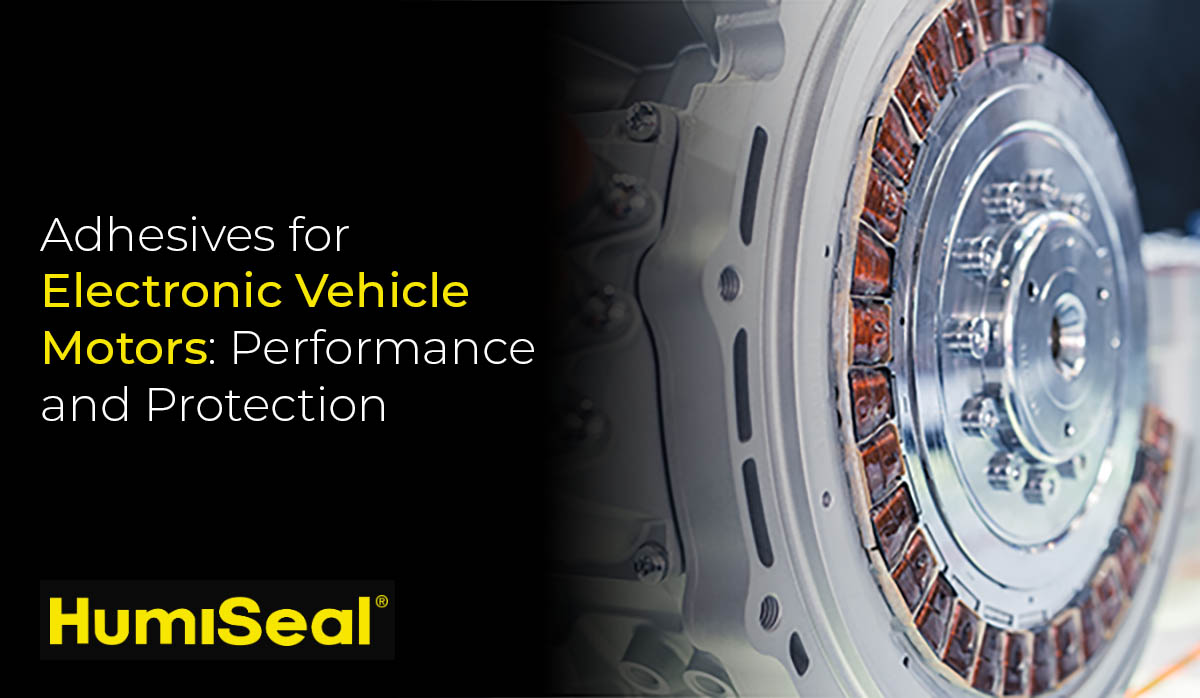
Adhesives for Electric Vehicle Motors: Performance and Protection

Posted by Dan Griffin on 6/14/2022

Chase Corporation, through our HumiSeal® and Resin Designs divisions, has spent the past decade preparing protection and reliability solutions for complex electronics. Notably, within the emerging EV market, we have identified needs within the assembly of EV motors where superior adhesion and protection are particularly critical.  

Read More

Topics: Adhesives, EV, Electric Vehicle

b* Stability Explained: Nobody Wants a Yellow LCD Display

Posted by Dan Griffin on 9/23/2021

Most anyone over the age of 30 has probably seen Back to the Future and remembers Marty McFly. One line of Marty’s that inexorably drew him into ill-advised actions was the classic “Nobody calls me yellow.” Nothing good comes from yellow, and this turns out to be just as applicable in LCD screen manufacture as it was in the movie.

Read More

Topics: Adhesives, Yellowing

Avoiding Bubbles in LOCA During the Assembly of LCD Displays

Posted by Artee Panwar, PhD on 8/26/2021

During the assembly process, the use of a liquid optically clear adhesive (LOCA) is important for ideal visual properties in LCD screen manufacture. The assembly process has evolved and advanced, but there are still potential weaknesses or defects that must be taken into account in both adhesive selection and process design. In this blog installment, we will discuss one of these potential defects: entrapped bubbles.

Read More

Topics: Adhesives

Eliminate HAZE & Bring Renewed Clarity to LCD Screens with Improved LOCA Adhesives

Posted by Artee Panwar, PhD on 6/09/2021

Haze and lack of clarity are considered among the most vexing and stubborn of defects in the assembly of LCD screens and surfaces. Significant advances have been made in the optical quality and capability of liquid crystals and LEDs; however, these advances can be stunted by choices made further along in the assembly process. Specifically, liquid optically clear adhesives (LOCAs) used in the bonding of assembly layers can cause haze and light refraction either immediately or under certain aging conditions. The proper design of LOCA materials must take this risk of haze development into consideration. There are a number of effective approaches to minimizing or eliminating haze.

Read More

Topics: Adhesives

Significance of Accelerated Weathering Exposure in the Design of LOCA

Posted by Artee Panwar, PhD on 12/10/2020

Liquid optically clear adhesives (LOCA) provide superior optical enhancement and anti-glare properties in the manufacture of liquid crystal displays. Light, temperature and moisture can significantly affect the physical and optical properties of these adhesives, promoting yellowing or discoloration, delamination, and loss of adhesion. In this discussion, we will explain the use of “accelerated weathering exposure” in the design of LOCA and its advantages over more traditional individual factor analysis.

Read More

Topics: Adhesives

4 Tips to Successfully Apply Two-Component Epoxy Adhesives

Posted by Albert Hernandez on 6/25/2018

Consisting of a resin and a hardener, a two-component epoxy can be formulated to offer a wide range of mechanical, thermal and electrical properties. While mix ratios differ, they all offer the ability to cure at ambient temperatures or elevated temperatures for faster cures. Here are a few tips to help you mix and apply your two-part epoxy.

Read More

Topics: Adhesives

How Best to Protect PCB Mounted Components from Vibration

Posted by Albert Hernandez on 2/26/2018

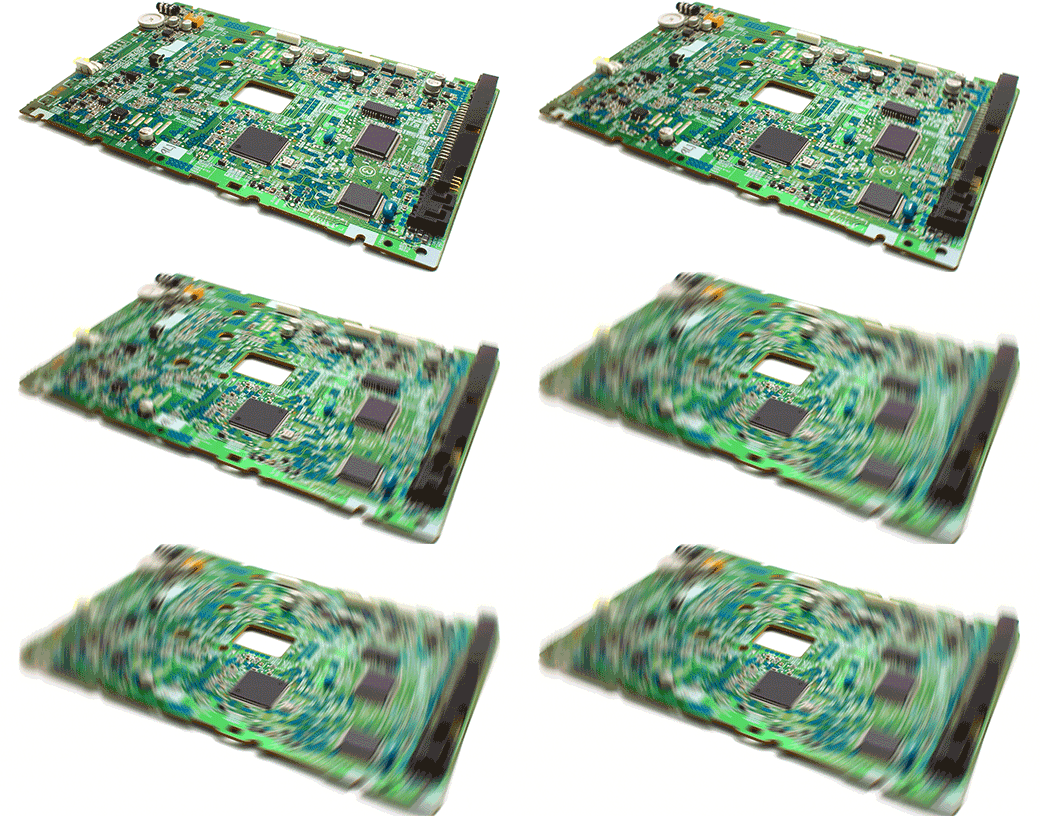
Electronics continue to be placed into harsher environments, and PCB component vibration dampening remains a challenge for many industries. When the solder connection strength is not going to be sufficient to withstand years of vibration, there is a solution: staking materials.

Numerous fields of industry manufacture products that are prone to high-vibration environments. Some of them are:

Read More

Topics: Adhesives, Vibration Suppression

Subscribe Here!

Featured posts

Request FREE Sample

Subscribe Here!

Featured posts