Skip to content

  • There are no suggestions because the search field is empty.
HumisealLogoforBlogpage

Next-Generation Conformal Coatings: Solving the Biggest Challenges in Modern PCB Protection

Posted by HumiSeal Editor on 3/11/2025

In the rapidly evolving electronics landscape, ensuring the reliability and longevity of printed circuit boards (PCBs) is paramount. Conformal coatings have long served as a protective shield against environmental factors such as moisture, corrosion, and thermal stress. However, as technology advances, traditional conformal coatings face new challenges, particularly with modern PCB designs. 

Read More

Topics: Conformal Coatings, Troubleshooting & Defects, PCB & Electronic Protection

Prevent Conformal Coating Bubbles by Fixing Common Application Errors

Posted by Dan Griffin on 1/31/2024

Bubbles. They can be a real challenge in any adhesive or coating, but they are particularly undesirable when covering electronics and printed circuit boards (PCBs) with fluid conformal coating material. The technical support engineers at Humiseal have over five decades of experience in support of PCB manufacturers. They report that bubbles within the finished film are the most commonly reported technical issue they receive.

In this brief article, we will discuss many of the causes as well as many potential solutions to the problem of entrapped bubbles.

Read More

Topics: Conformal Coatings, Troubleshooting & Defects

Developing Conformal Coatings for the 21st Century: An Ever-Changing Landscape

Posted by David Greenman on 11/29/2023

Before we look at conformal coating in the 21st Century, it is worth looking at how our industry has changed since the 20th Century and the effect these changes have had on reliability. 

30 years ago, we had:

  • Through-hole PCAs with axial components and wide conductor spacing (see fig. 1)
  • Round axial components that were easy to conformably coat
  • Wide conductor spacing (causing a few problems with dendritic growth)
  • Leaded solder
  • The widely adopted practice of cleaning before conformal coating

Fig. 1

Now move forward 30 years. In that time, surface mount components have been developed that are predominantly square with sharp edges, conductor spacing has been reduced, and packing densities have increased to levels never dreamt of in the past (see fig. 2). 

Read More

Topics: Conformal Coatings, Troubleshooting & Defects

The Next Stage of Total PCB Protection: Sharp Edge Conformal Coatings

Posted by Dan Griffin on 5/18/2023

We at HumiSeal are no strangers to conformal coatings; and if you’re reading our blogs, it’s likely you’re familiar with these coatings as well. The word “conformal” is descriptive of the function of the coatings which are expected to spread and conform evenly across all surfaces that are to be protected. This uniform and even distribution is necessary to protect delicate electronic components from things such as humidity, water, vibrations, and thermal damage (to name a few).

Read More

Topics: Conformal Coatings, Troubleshooting & Defects

b* Stability Explained: Nobody Wants a Yellow LCD Display

Posted by Dan Griffin on 9/23/2021

Most anyone over the age of 30 has probably seen Back to the Future and remembers Marty McFly. One line of Marty’s that inexorably drew him into ill-advised actions was the classic “Nobody calls me yellow.” Nothing good comes from yellow, and this turns out to be just as applicable in LCD screen manufacture as it was in the movie.

Read More

Topics: Troubleshooting & Defects, Adhesives

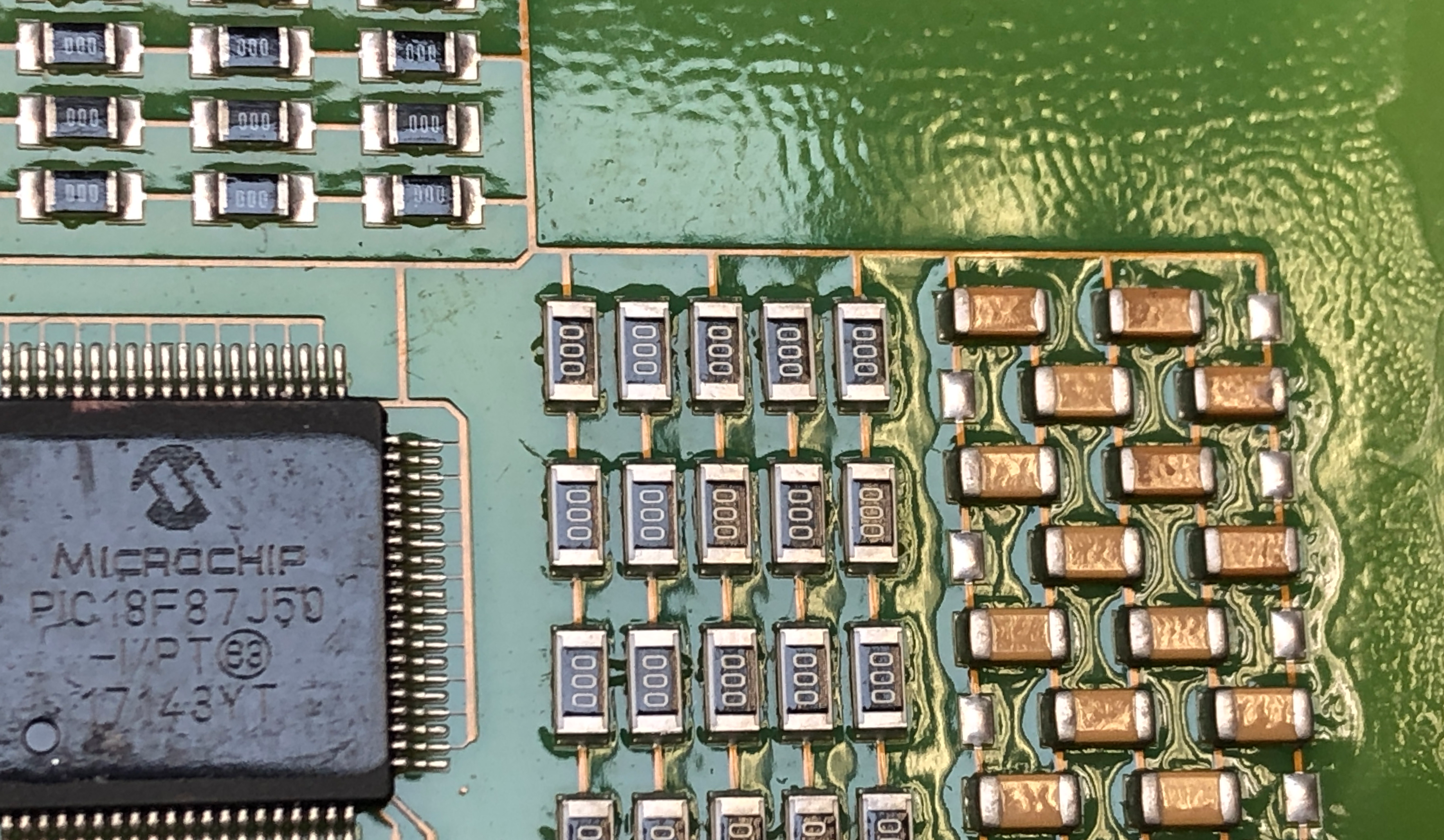
How to Avoid Orange Peel Appearance in Your Conformal Coating

Posted by HumiSeal Editor on 10/21/2019

Have you ever seen your conformal coating look like the pictures above? It is a fairly common report to our technical support group. The appearance is often described as “orange peel” or sometimes “alligator skin.” We would like to offer you a basic explanation of this phenomenon, along with some simple approaches to avoid its occurrence or eliminate it when it appears.

What is orange peel and what is the cause?

In our experience, the uneven appearance that looks like the surface of your garden variety orange is almost always the result of exposing the coating to heat and airflow too quickly.

Read More

Topics: Conformal Coatings, Troubleshooting & Defects

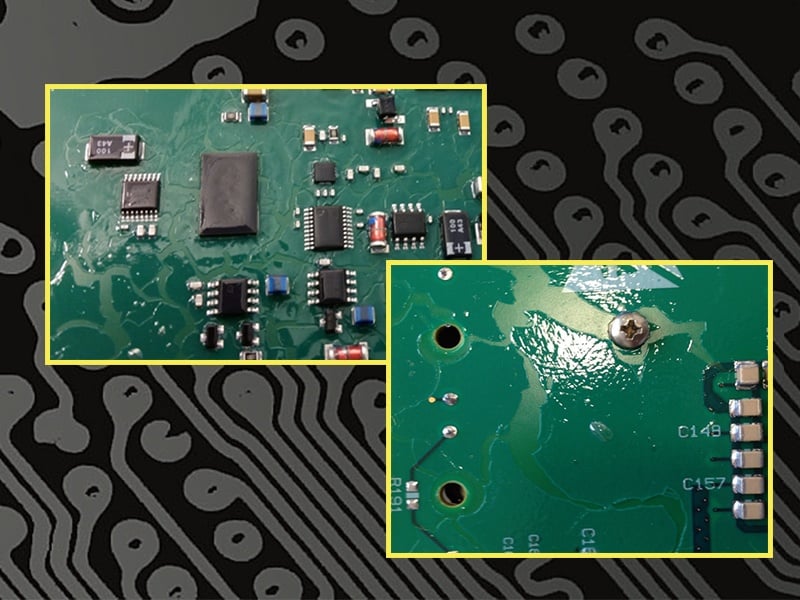
Simple Steps to Ensure Proper Wetting & Good Adhesion

Posted by Monika Dybalska on 11/20/2017

Have you ever seen your conformal coating separate or de-wet?  Have you observed the conformal coating to flake off after cure? The key to your success is understanding the relationship between surface energy (of the substrate) and surface tension (of the conformal coating).  There are some simple steps you can take to help ensure you possess a healthy balance of both.

Read More

Topics: Conformal Coatings, Troubleshooting & Defects, Cleaning & Surface Preparation

Easy Techniques to Abate Conformal Coating Wicking

Posted by Chase Corp Editor on 1/11/2017

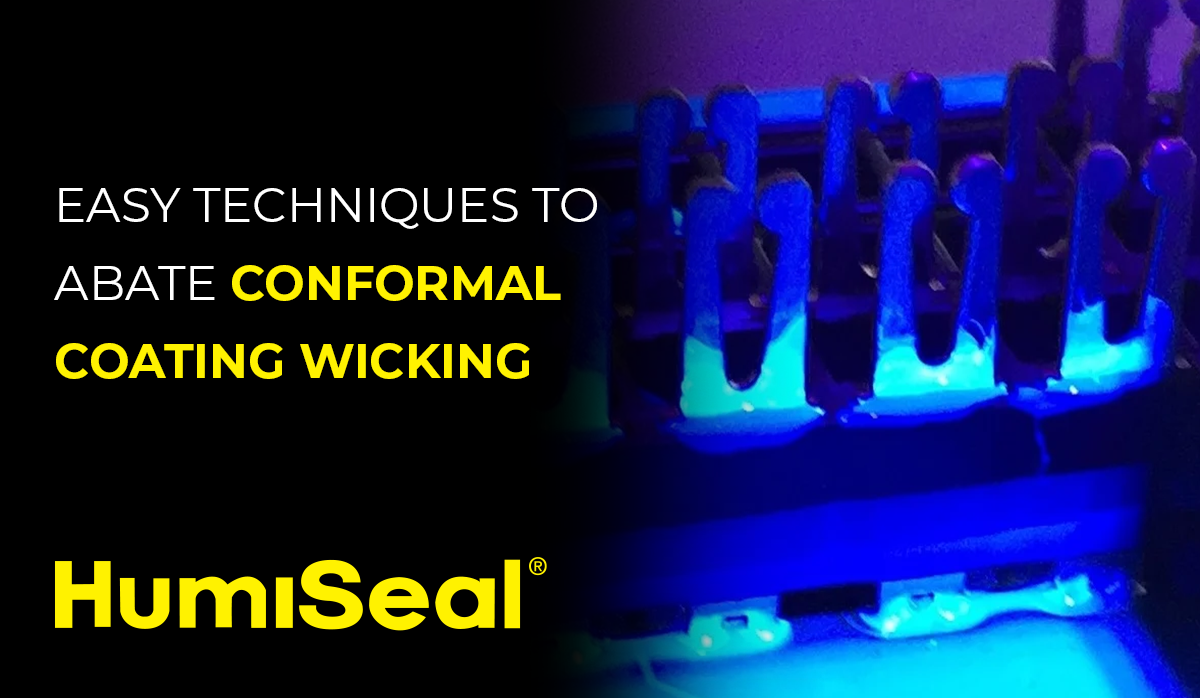
Have you ever experienced uncontrolled conformal coating migration?   Have you had to strip your recently coated boards because conformal coating wicked into non-desired keep out zones?   Wicking is a phenomenon caused by a combination of low surface tension coating, which is usually characterized by low viscosity, coupled with strong capillary forces generated by low standoff gaps possessed by the SMT process.   Wicking into connectors; onto grounding hole; or under sensitive components will create defects that will have to be reworked, as it may cause reliability concerns with the finished product, which we will describe in detail.   There are ways to either reduce and/or eliminate wicking issues through decisions made during preparation, application, and conformal coating selection.    

Read More

Topics: Conformal Coatings, Troubleshooting & Defects, PCB & Electronic Protection

Subscribe Here!

Featured posts

Request FREE Sample

Subscribe Here!

Featured posts