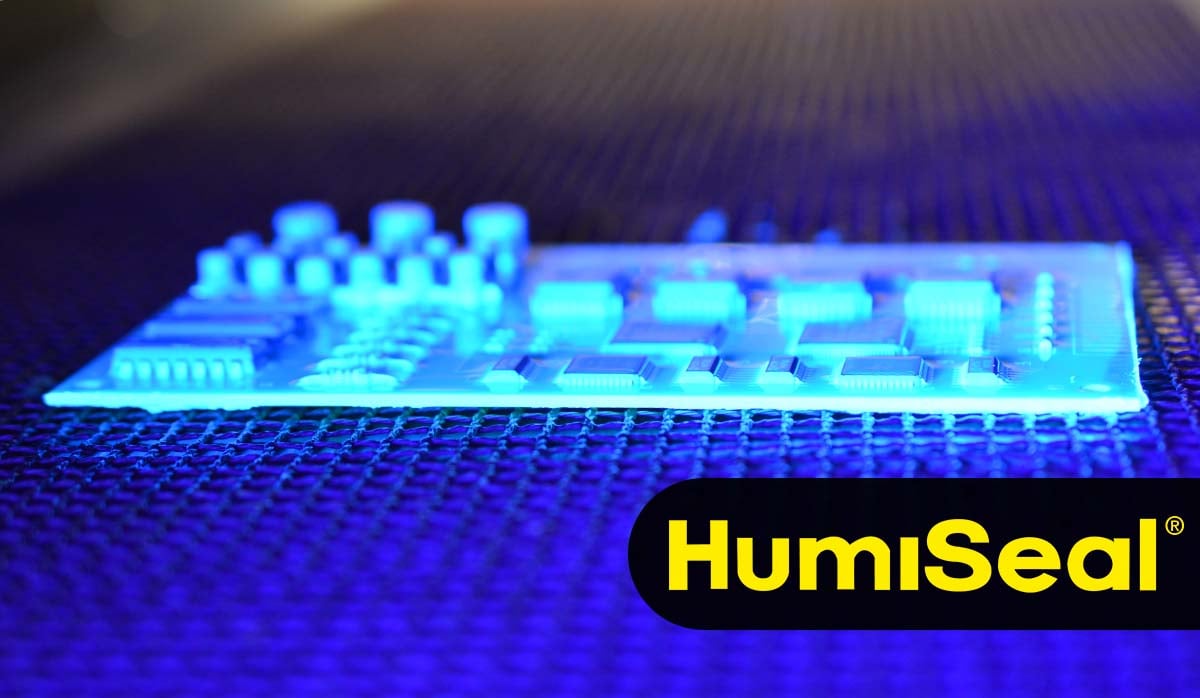
Conformal coating technology is on a continuous path of improvement, and we're excited to say the latest step on that path just happened. UV550 is the most recent innovation from HumiSeal, continuing the trend of industry-defining capabilities in the conformal coating space. This is to be expected from the original inventors of conformal coating material. But what sets UV550 apart from the rest?
Let's discuss how the ever-changing requirements of the automotive and white market space fueled the thresholds this uv-curable material attains, especially with regard to its durability under the most extreme thermal and mechanical cycling conditions.
Read More
Topics:
Conformal Coatings,
UV Curing & UV Coatings
HumiSeal development specialists have been designing high-performance, UV-curable conformal coatings for approximately three decades. Compared to legacy solvent-borne and silicone technologies, UV- curable coatings provide some unique properties that can be of great value such as-
- Nearly instantaneous, consistent curing
- Superb moisture and environmental protection
- Little or no VOC content
These coatings also lend themselves well to high-speed and high-volume applications due to manufacturing advantages such as-
- Minimal WIP due to immediate cure capability
- Low material cost due to 100% solids chemistry
- Smaller manufacturing footprint due to much smaller curing equipment
Read More
Topics:
Conformal Coatings,
UV Curing & UV Coatings
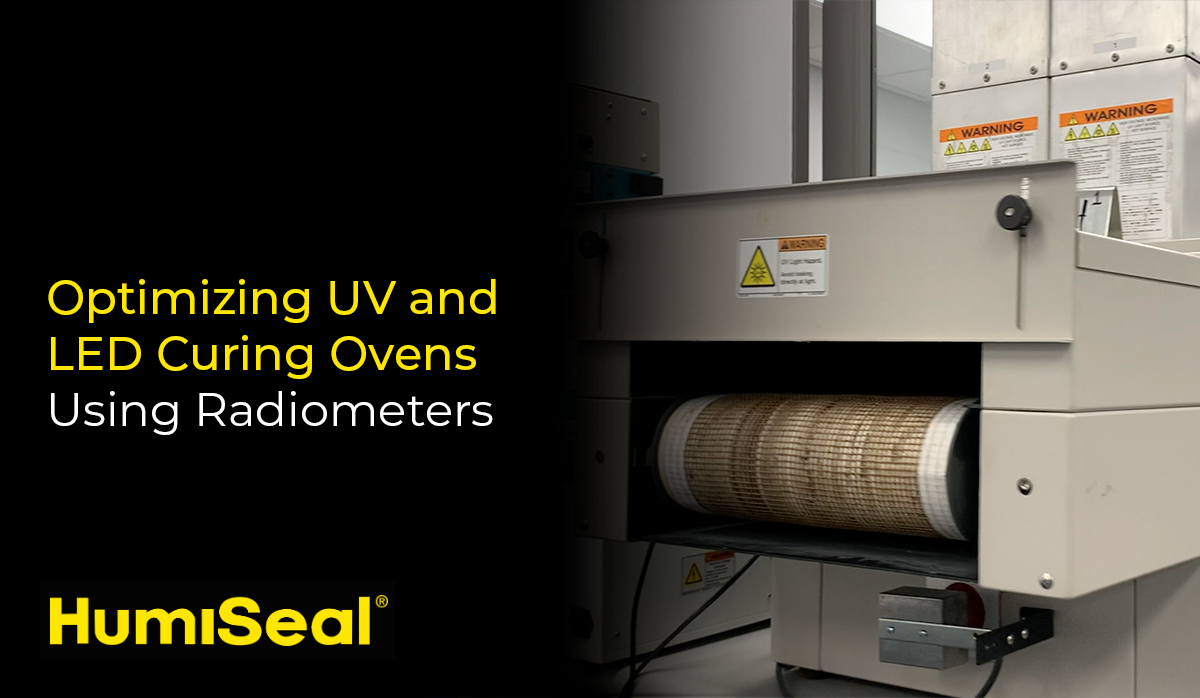
We recently published a blog outlining radiometer configuration and usage. Give it a read if you missed it! Since you’re now an expert at operating your radiometer, this blog will look at the steps needed to optimize your UV or LED oven.
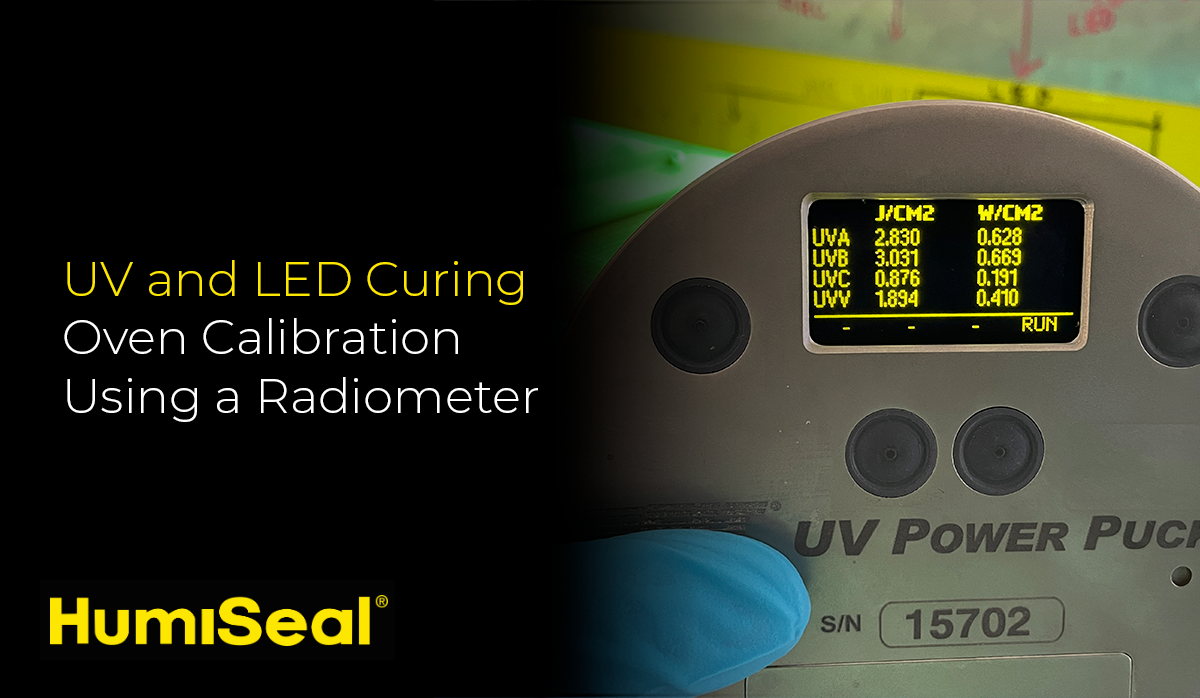
This process is practically as simple as increasing and decreasing the UV or LED cure system’s conveyor speed to affect the dose. You must also consider increasing and decreasing the distance between the cure system’s lights and the radiometer to achieve at least the minimum irradiance required per the coating, adhesive or GELS technical data sheet.
One further note regarding LED cure systems is to ensure you’re using a light source that not only has the correct power (Watts), but also emits UV energy in the correct wavelength.
How to Calibrate a UV or LED Curing Oven
Read More
Topics:
Conformal Coatings,
UV Curing & UV Coatings
It's 2023; the electronics industry is embracing UV-curable coatings. There are many valid reasons for this, from the desire to reduce/eliminate VOCs, difficulty navigating ever-changing and complex environmental regulations, increasing energy and labor costs as well as the sheer volumes modern assembly lines must increasingly meet.
Read More
Topics:
Conformal Coatings,
UV Curing & UV Coatings
The transition to LED curable conformal coatings is beginning to build momentum, beginning as a slow evolution and developing into a revolution of sorts. The driving forces behind this include:
- Improved processing equipment designs and availability
- Aging or outdated application equipment replacements
- Increasing range of LED curables commercially available or in development
- Rising labor, equipment, and energy costs
If you and your organization are faced with aging equipment and higher costs, there isn't a better time to consider the potential advantages of LED curable conformal coatings!
Read More
Topics:
Conformal Coatings,
PCB & Electronic Protection,
UV Curing & UV Coatings
Durable Protection for Demanding Automotive Requirements
HumiSeal chemists have been designing state-of-the-art conformal coatings for nearly 70 years, first producing UV curable coatings more than two decades ago. At that time, UV curable technology was considered the next generation of coatings, mainly due to its advantages; including:
Read More
Topics:
Conformal Coatings,
Reliability & Environmental Protection,
UV Curing & UV Coatings,
Automotive & EV
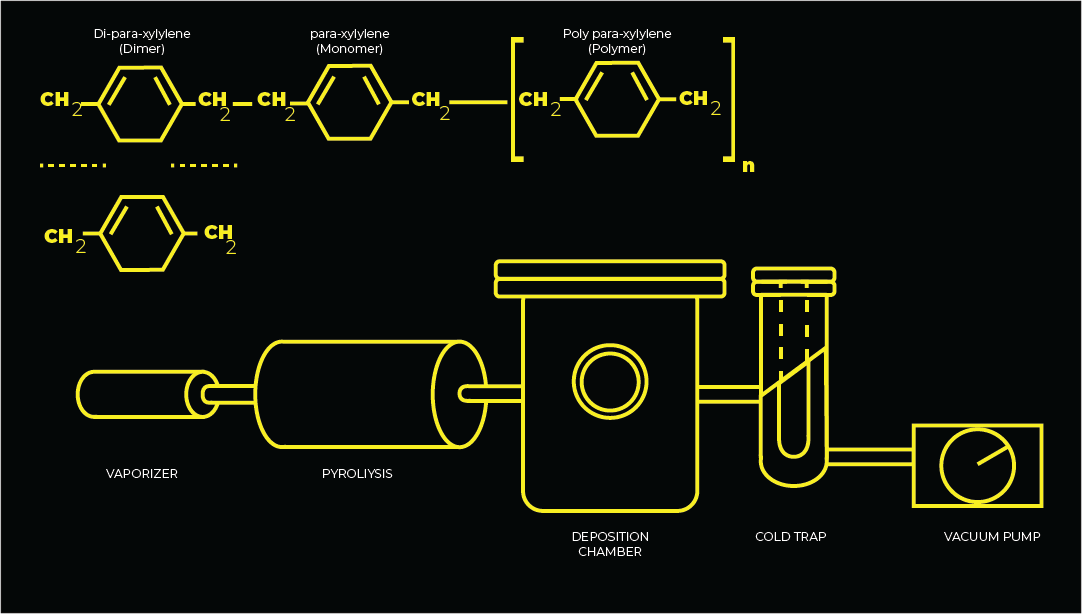
Conformal coating with parylene is a very different process compared to coating with traditional solvent-borne or UV curable materials. Parylene coating has some advantages including
- a very thin application profile,
- uniform and complete surface coverage, and
- generally excellent protection and minimal outgassing potential.
On the other hand, parylene coating also presents unique challenges such as
- a significant investment in complex equipment,
- batch processes that limit productivity and increases costs, and
- the user’s inability to selectively control where the coating is applied.
It is this final challenge that we will concern ourselves with within the following discussion.
Read More
Topics:
Conformal Coatings,
Application & Processing,
UV Curing & UV Coatings
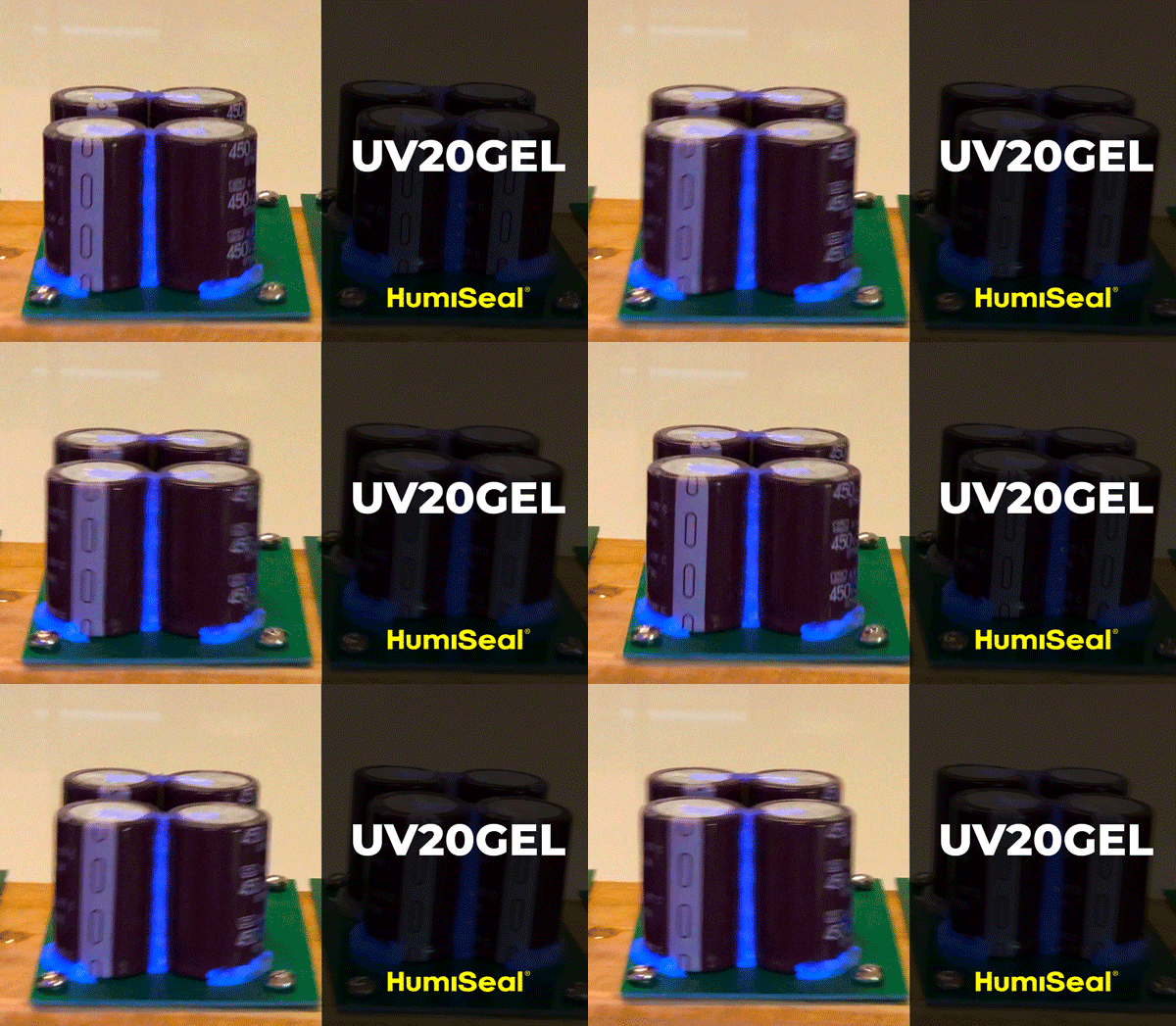
UV20GEL is a recent innovation from the polymer scientists at HumiSeal.
It provides additional durability and ruggedization for printed circuit boards in demanding applications including automotive, aerospace, and appliances among others. This flexible, high adhesion gel is used for staking taller or sensitive components to provide resistance to vibration and mechanical shock conditions.
Read More
Topics:
Reliability & Environmental Protection,
PCB & Electronic Protection,
UV Curing & UV Coatings
Conformal coatings rose to prominence in protection of printed circuit boards (PCBs) about five decades ago. Through their use, early PCB failures due to dust and dirt, liquids, and humidity contamination were greatly reduced or eliminated. This in turn allowed for the longer warranties and improved reliability we see today. Early conformal coatings, many of which are still in use today, were comprised of polymers dissolved in various solvents such as MEK, toluene, or xylene.
An approximate evolution of conformal coating chemistries could be viewed as
- solvent-borne acrylics and polyurethanes
- waterborne acrylics
- synthetic rubber coatings
- UV-curable acrylated urethanes
- LED UV-curable acrylated urethanes
Read More
Topics:
Conformal Coatings,
Sustainability & VOC,
UV Curing & UV Coatings
UV curable conformal coatings have attained widespread use in applications requiring fast through-put times, such as automotive, white goods, and industrial control manufacturing. In addition to speed of cure, UV curable conformal coatings provide the advantage of high physical protection and chemical resistance for electronic systems. Traditionally the UV curing of coatings is an energy intensive process. One that uses high-power mercury discharge lamps, which as a result of use produce considerable amounts of heat and ozone. The recent introduction of new, high-output LED UVA light units allows for the successful cure of conformal coatings by using between 365nm and 395nm wavelength of UVA light, effectively curing with minimal heat and no ozone generation.
Read More
Topics:
Conformal Coatings,
UV Curing & UV Coatings